The Best Home Care Agencies for Seniors in Lincoln, NE for 2025
Caring.com offers a free service to help families find senior care and ...
authentic reviews to help you in your decision. On average in Lincoln, NE, residents and their loved ones rate In Home Care agencies 4.6 out of 5 stars across the options below.
Filters
Loading...
What you can do with Caring
On this page:
Paying for Home Care in Lincoln, NE
The Cost of Home Care in Lincoln, NE
In Lincoln, the $5,148 per month that agencies charge for nonmedical home care is standard in most areas of the state, according to Genworth’s 2021 Cost of Care Survey. It matches the state average and is just $191 higher than the national median. The only other area in Nebraska with higher home care rates is Omaha, where costs are $381 more per month. Across the state line into Missouri, seniors can save on home care in St. Joseph, where costs average $381 less than Lincoln. In Cheyenne, across the western border, costs are $477 more expensive than Lincoln.
Lincoln
$5,148
Nebraska
$5,148
The United States
$4,957
Omaha
$5,529
St. Joseph
$4,767
Cheyenne
$5,625
The Cost of Home Care vs. Other Senior Care Options in Lincoln, NE
The cost of home care is $5,148 per month in Lincoln. Home health care agencies charge the same average rate for their services and include some skilled nursing services. Assisted living, which offers similar services to home care but also includes room and board, averages $4,715 per month, which could allow seniors to save $433 per month. The most affordable option for senior care is adult day health care at $579 per month. However, seniors may need a live-in caregiver to make this a safe solution for after-hours care. Nursing homes offer the most comprehensive level of care and are the most expensive, at $7,908 per month.
Home Care
$5,148
Home Health Aide
$5,148
Adult Day Health Care
$579
Assisted Living
$4,715
Nursing Home Care (semiprivate room)
$7,908
Financial Assistance for Home Care in Lincoln, NE
Given the high cost of in-home care, many people use one or more forms of financial assistance to cover the expenses. Below, we explain some of the most common sources of financial help for paying for in-home care. If none of these options are available to you, you can reach out to your Area Agency on Aging or Aging and Disability Resource Center to learn about local resources.
- Long-Term Care Insurance: Long-term care insurance covers expenses related to senior care, including in-home care. Depending on the policy type, beneficiaries may receive a cash payment to use towards long-term care or reimbursement for qualifying long-term care expenses. Note that there are limitations- typically a maximum benefit of $150 per day- and exact coverage terms vary depending on the exact policy, so always check the details.
- Medicare: Medicare does not cover in-home care because it is classified as custodial, or non-medical, care. However, some Medicare Advantage and Medicare Supplement plans, which offer expanded benefits, may cover in-home custodial care.
- Medicaid: Medicaid coverage of in-home care varies between different states because it is not a federally mandated benefit. Currently, all states cover some in-home care either through their standard Medicaid or a waiver program. The specific coverage rules are set individually by each state.
- Veterans’ Benefits: The Aid and Attendance benefit is a monthly cash payment that beneficiaries can use to pay for senior care, including in-home care services. To qualify for A&A, Veterans must already receive the VA pension and meet several additional requirements, including needing assistance with the activities of daily living. Contact the Department of Veterans Affairs to learn more.
- Reverse Mortgages: Home Equity Conversion Mortgages (HECMs) are federally insured loans that are available to homeowners age 62 and over. Reverse mortgages allow you to access a portion of your home’s equity in cash, tax free. Many seniors use reverse mortgages to finance their care expenses, including in-home care. Note that although there are no monthly payments due on reverse mortgage loans, borrowers do have to repay the loan once the last surviving homeowner passes away, moves, or sells the home.
Free & Low-Cost Home Care Resources in Lincoln, NE
The City of Lincoln and various nonprofit partners offer seniors assistance with aging at home. Financial programs and subsidized services are available through senior centers, the Aging and Disability Resource Center and other local agencies. Seniors can receive financial, legal, transportation and in-home assistance.
| Resource | Contact | Service |
|---|---|---|
| Aging and Disability Resource Center | (402) 441-7070 | The Aging and Disability Resource Center administered by the City of Lincoln offers a variety of assistance options for local seniors aged 60 and older. Some options include assistance with paying for long-term care, in-home care referrals and financial guidance. |
| Aging Partners in Victory Park | (800) 247-0938 | Aging Partners offers seniors a central location to connect with care managers and resource specialists in a place that also offers congregate meals and access to a fitness center. Seniors are welcome to walk-in Monday through Friday from 8:00 am until 4:30 pm. |
| Nebraska SHIP | (800) 234-7119 | Nebraska SHIP is a benefits counseling organization that assists seniors in navigating Medicare and Medicaid benefits. Certified counselors offer unbiased information about various Medicare Advantage policies and other insurance options along with help in understanding benefits. |
| Transportation Services | (402) 441-7863 | Aging Partners manages a variety of programs designed to help seniors retain independence for as long as possible. Transportation services are available with prior scheduling at no charge for those who qualify, with a suggested donation of $2 per trip. |
| Legal Aid of Nebraska | (800) 527-7249 | Legal Aid of Nebraska operates the ElderAccessLine, which offers free legal assistance to seniors aged 60 and older. Some legal issues include tenant disputes, power of attorney, living wills, Medicare, Medicaid and consumer protection. |
Determining Your Loved One’s Need for In-Home Care
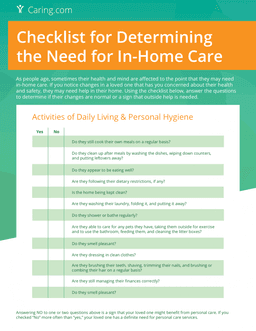
Aging can be a difficult process, and loved ones may not always ask for help – often times it’s up to their family to evaluate their need for help around the house. While no two situations are exactly alike, this checklist can help you and your loved ones determine when it’s time to start the search for a home care provider.


Guidelines for Talking About In-Home Care
If you’ve determined that your loved one needs the assistance of a care provider in their home, it may be time for a difficult conversation. Handled correctly, however, this process can bring a family together and ensure that everyone’s concerns are addressed. Use this PDF as a starting point to help the conversation stay as positive and productive as possible.


Frequently Asked Questions
Reviews of Care Providers Nearby
Home Care
Lana M_1
5.0
Review of SYNERGY HomeCare of Lincoln
I just think they are pretty good everywhere. I really like when the caregiver comes, and I think she does a good job. I have some health issues, and I'm home alone. It's just been a gift to have...
Home Care
Tim W_10
5.0
Review of SYNERGY HomeCare of Lincoln
I like that the agency never gets you answering machines, and they do follow through with any issues. They are personable to make sure you have the right caregiver coming to help. The client is...
Home Care
Sharlene E
5.0
Review of SYNERGY HomeCare of Lincoln
I like the times of the visits. I don't have to catch public transportation to my appointments and that makes my life better.