.png&w=256&q=75)
Home Instead - Tulsa, OK
4148 E 51st St, Tulsa, OK 74135
4.3
(8 reviews)
"Everyone is very helpful and caring - they go the extra mile!"
Pricing not available
Caring.com offers a free service to help families find senior care and ...
4148 E 51st St, Tulsa, OK 74135
4.3
(8 reviews)
"Everyone is very helpful and caring - they go the extra mile!"
Pricing not available
5200 S Yale Ave STE 103, Tulsa, OK 74135
5.0
(1 reviews)
"HomeWell has the best caregivers around. I needed help taking care of my mother and didn't want to put her in a nursery home. My mother looks forward to seeing her caregiver every day and says she feels like family to her. I'm so glad I found out about HomeWell."
Pricing not available
CARING STARS WINNER
9717 East 42nd Street, Tulsa, OK 74146
4.5
(75 reviews)
"Many organizations provide the basics of care for those struggling with health issues; however, not all provide genuine, compassionate relationship to their clients. Right at Home staffers truly “see” their patients. The caregivers who came into the home provided warm companionship, empathy and kindness in massive measure. Those facing end of life are not only ill, they are ill at ease—fearful and uncertain. Every single RAH worker who entered the home put everyone at the best ease possible while tending to the needs and wellbeing of the patient. I can’t recommend them highly enough! "
Pricing not available

10810 East 45th Street, Tulsa, OK 74146
4.0
(1 reviews)
"My mom seems to be working fine with Comfort Keepers of Tulsa & OKC. She may even have more days than the initial three days a week I signed up for. We started with them last week. I've only dealt with one person, and based on experience she seems to be very caring, and she tries to follow my direction. I still believe their service is a bit expensive for what is provided. However, there have been no problems with communication."
Pricing not available
202 South Cedar St, Suite D, Owasso, OK 74055
5.0
(1 reviews)
"Throughout the duration of my Father's illness, we depended on Home Instead - Owasso to provide quality, professional and compassionate Caregivers so that he was able to age in place and that's exactly the service we received. Thank you for being a part of our family and for seeing Dad through his final days."
Pricing not available

5110 South Yale Avenue, Tulsa, OK 74135
4.5
(127 reviews)
"We had used Brightstar before that was sent by the VA. I did not like them at all. I had one very good man from them and that's all. I did not care for about the rest. It was not a good experience with them. "
Pricing not available
Caring's Family Advisors are here to help you with questions about senior living and care options.
CARING STARS WINNER
3939 S Harvard Ave, Tulsa, OK 74135
4.6
(36 reviews)
"Our aunt was in hospice for the last weeks of her life. The hospice workers only came 3 hours per week. We hired My Choice to provide a caregiver so my aunt would not be alone. They went above and beyond our expectations. So kind, so compassionate and so attentive. It was a hard loss for our family but it was eased because we knew Aunt Mary had the best care we could give her. "
Pricing not available

4130 South Harvard Avenue, Suite A-2 , Tulsa, OK 74135
Pricing not available

CARING STARS WINNER
4825 S Peoria Ave , Tulsa, OK 74105
5.0
(7 reviews)
"Based on my experience “Cornerstone Caregiver” is an excellent company providing extraordinary client care. Their Caregivers are courteous and focused on helping while being concerned about task details, safety, persevering dignity and my wellbeing. When issues did occur Management resolved them quickly and seamlessly with excellent communication with me. If you have a need I highly recommend Cornerstone Caregiver. "
Pricing not available

1717 S Lewis Avenue , Tulsa, OK 74104
We know your first priority when looking for the best home care company in the Tulsa Metro area is finding someone who will care for your loved one as you would… someone you can always trust and rely on. Care Partners is here when you need support — whether it's helping a senior age in place, caring for a family member with a chronic illness or disability, or assisting someone who is recovering from surgery. Our goal is to enhance quality of life for you and your loved one with exceptional, dependable, non-medical, wholistic home care. Call us today to schedule your free home assessment and care plan.
Pricing not available

1831 E. 71st Street, Tulsa, OK 74136
5.0
(2 reviews)
"Thank you Timmie for your time and patients with us."
Pricing not available
1831 E. 71st Street, Suite 100, Tulsa, OK 74136
5.0
(1 reviews)
"My mother used Amada Senior Care. They were wonderful. They were absolutely topnotch. They did everything and then some of what we expected. The caregivers were really rather redundant and that's the only reason we canceled them, but they were always on time, very helpful, and willing to do anything. We were afraid my mom would have trouble bathing herself and getting around outside, going to get the mail and everything, but she got up and got all that stuff done before the caregivers got there. They went out of their way to do anything, and everything that she would like. I don't have a complaint about any of them. They were willing to modify schedules to fit our needs, and when and if my mom progresses to the point that she does need them, I will definitely call them back. They take her from here to there/grocery shopping."
Pricing not available

1843 E 15th Street, Tulsa, OK 74104
5.0
(1 reviews)
"We hired Griswold Home Care for my mom. Everybody has been very professional and good. We're really happy with it. The staff members were excellent. They assist my mother with bathing, personal hygiene, and walking when she's dizzy. They go with her to doctors' appointments. Sometimes, they stay overnight if I'm out of town. They cook lunch. They clean her area, her bathroom, and all of that. They do her laundry."
Pricing not available
1532 S Peoria Ave , Tulsa, OK 74120
4.5
(227 reviews)
"Every aspect from the personal caregiver to the administrative staff exceeds my expectations. The caregiver is warm, caring and provides very customized caregiving. The staff is helpful and efficient. Based on my two month relationship with Visiting Angels, I would highly recommend this excellent agency. "
Pricing not available

12929 E. 21st Street, Suite F1, Tulsa, OK 74134
5.0
(1 reviews)
"We are satisfied with Golden Care and their caregiver. My caregiver is very good, and she does very well. I have a lot of problem with my toes, and I have fallen about three times here. She has helped me a lot to get through those."
Pricing not available

1901 W Concord Cir N, Broken Arrow, OK 74012
4.0
(1 reviews)
"We have home care for my wife right now and they are from Affordable Assistance. I have been using this agency for two and a half months now. The caregiver we have comes in twice a week and she is doing a good job. She is about the same age as my wife, so they have several interests together. "
Pricing not available
240 East Apache St, Tulsa, OK 74106
2.0
(3 reviews)
"My mom used Oklahoma Community Care Givers for three weeks before she passed away last Friday. The people were great. They were very friendly and tried their best to be helpful. They promised me they would not have problems covering 24 hour care; but when it came down to it, they could not supply 24 hour care. In fact, they had a real hard time supplying any kind of care at first because we are located in a rural area. If we had been closer to Tulsa or some big city, they wouldn't have had as much trouble finding caregivers. It was very stressful. I honestly do not know if I would recommend them to someone because of the stress it caused me. They need to have a better supply or line up of caregivers before they ever take on somebody. When they finally got someone who was willing to work 12 hours a day, we were able to finally keep her home. The actual caregivers themselves were great. They were all wonderful women. They were very caring, did very well with mom, and I had no problems with them. They fed her, changed her, took care of her beddings, and gave medications. The billing went fine. We did not have to pay monthly ahead of time as a deposit, so that was like $15,000 that we had to pay them upfront. So once we have paid the final bill, we will see how easy it will be for us to get our deposit back from them. I have not dealt with that yet."
Pricing not available

2492 W New Orleans St, Broken Arrow, OK 74011
4.7
(9 reviews)
"I found Senior Helpers in a website and I made contact with me. We had a personal interview and started with with Senior Helpers. They respond quickly when when we call them. We're pleased with the concern that caregivers show to dad. They're very conscientious. "
Pricing not available

751 West New Orleans St, Broken Arrow, OK 74011
4.5
(2 reviews)
"Bright Home Health has been providing care giving assistance for my Mom for the past three months. We are so appreciative of, and impressed with the quality of care they provide. Every Associate has been professional, personable, and compassionate. My mom is very pleased with the kind and helpful aid she is receiving, which is a blessing and relief to both of us. I recommend Bright Home Health without reservation."
Pricing not available
According to the 2022 Genworth Cost of Care Survey, Tulsa’s average monthly home care cost is $4,767, lower than the state average by almost $100 and the national average by nearly $200. Compared to other cities in the state, Tulsa’s average is lower than Enid’s, which mirrors the state average, and Oklahoma City’s, which reflects the national average. However, its cost is higher than Lawton’s average of $3,813 per month.
Tulsa
$4,767
Oklahoma
$4,862
United States
$4,957
Lawton
$3,813
Enid
$4,862
Oklahoma City
$4,957
Home care covers personal care, such as bathing and grooming, and includes household tasks, such as light housekeeping and preparing meals. It doesn’t involve medical services generally provided by registered nurses or therapists, which comes with home health services. Despite this major difference, both types of in-home care cost the same in Tulsa at $4,767 monthly. Seniors seeking care in a residential setting pay less for assisted living, averaging $3,855, but more for nursing home care, at $5,323 for a semiprivate room. Adult day health care is significantly less than home care at only $1,517, but it provides limited services outside the home.
Home Care
$4,767
Home Health Care
$4,767
Adult Day Health Care
$1,517
Assisted Living
$3,855
Nursing Home Care (semiprivate room)
$5,323
Given the high cost of in-home care, many people use one or more forms of financial assistance to cover the expenses. Below, we explain some of the most common sources of financial help for paying for in-home care. If none of these options are available to you, you can reach out to your Area Agency on Aging or Aging and Disability Resource Center to learn about local resources.
Tulsa has several nonprofit or government entities offering various programs to help seniors who choose to age in place remain living independently in their homes safely instead of moving to a residential care home. Services run the gamut from financial assistance through property taxes and energy efficiency to at-home services, such as meal deliveries and respite care.
| Resource | Contact | Service |
|---|---|---|
| Senior Property Tax Exemption | (918) 596-5100 | Property owners aged 65 or older throughout Tulsa County who meet income limits and qualify for a Homestead Exemption may receive the Senior Valuation Limitation. This program freezes the Taxable Fair Cash Value of their property. Qualified seniors may also claim the county’s Additional Homestead Exemption. |
| LIFE Senior Services | (918) 664-9000 | LIFE Senior Services promotes independence for seniors by offering home and community-based services that promote healthy aging-in-place. The program also provides services and support to family caregivers and helps seniors understand their long-term care options. |
| Low Income Home Energy Assistance Program | (405) 522-5050 | LIHEAP is a federally funded program administered by Oklahoma Human Services. The program helps cover the costs of heating in the winter and cooling in the summer. It also includes the Energy Crisis Assistance Program. Households with seniors, disabled persons or children may be given preference. |
| Meals on Wheels Metro Tulsa | (918) 627-4105 | Meals on Wheels Metro Tulsa uses volunteers to deliver meals to seniors who find meal preparation difficult. Meal delivery drivers also perform wellness checks while dropping off food to ensure participants’ ongoing good health. This program also includes minor home repairs and supporting championship animals. |
| Weatherization Assistance Program | (800) 879-6552 | The Oklahoma Department of Commerce offers eligible households weatherization services. These services come at no cost and help lower utility bills by increasing energy efficiency. Weatherization also improves health and safety. Households with seniors aged 60 or older, disabled individuals or children receive prioritization. |
Aging can be a difficult process, and loved ones may not always ask for help – often times it’s up to their family to evaluate their need for help around the house. While no two situations are exactly alike, this checklist can help you and your loved ones determine when it’s time to start the search for a home care provider.
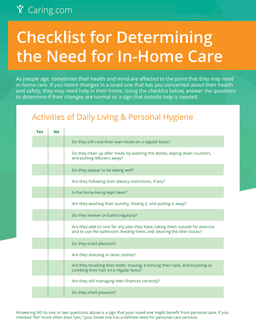
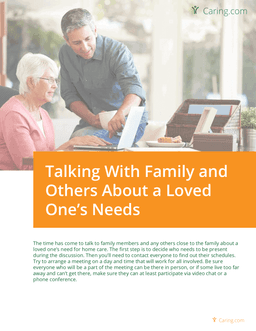
If you’ve determined that your loved one needs the assistance of a care provider in their home, it may be time for a difficult conversation. Handled correctly, however, this process can bring a family together and ensure that everyone’s concerns are addressed. Use this PDF as a starting point to help the conversation stay as positive and productive as possible.
Home Care
Carol_16
5.0
Review of BrightStar Care Tulsa
They're very reactive and timely. The agency was there to be with mama when I needed to sleep.
Home Care
Sherri P_2
5.0
Review of Home Helpers of South Tulsa
I like that the agency does what I ask them to do. The provider has helped the most with getting me something to drink and eat.
Home Care
Jamie C
5.0
Review of Home Helpers of South Tulsa
I like the caregiver they send. The chores, personal care, and food makes my life easier.