The Best Home Care Agencies for Seniors in Nampa, ID for 2025
Caring.com offers a free service to help families find senior care and authentic reviews to help you in your decision. On average in Nampa, ID, residents and their loved ones rate In Home Care agencies 4.6 out of 5 stars across the options below.
Filters
Loading...
What you can do with Caring
Paying for Home Care in Nampa, ID
Nampa’s average monthly price for home care is roughly 14% higher than the national average price of $4,957 and 5% higher than the Idaho average of $5,434. Coeur d’Alene, a city in the upper north of the state, reports Idaho’s highest prices for home care, while Lewiston is just two hours to the south but reports the state’s lowest prices for home care. Seniors in Twin Falls also see below-average prices. Idaho Falls’ prices are in line with Nampa’s.
The Cost of Home Care in Nampa, ID
Nampa
$5,720
Idaho
$5,434
The United States
$4,957
Twin Falls
$4,767
Lewiston
$4,576
Idaho Falls
$5,720
Coeur d'Alene
$5,815
The Cost of Home Care vs. Other Senior Care Options in Nampa, ID
Home health care, which includes light medical assistance, is the same price as home care in Nampa, but the average price of assisted living is thousands of dollars cheaper. Adult day care is even less expensive, although it’s inadequate for seniors who need round-the-clock support. Seniors living with advanced medical issues may find nursing home care provides the best coverage. However, a semiprivate room in a nursing home is nearly $2,900 more expensive per month than home care.
Home Care
$5,720
Home Health Care
$5,720
Adult Day Health Care
$2,167
Assisted Living Facility
$3,586
Nursing Home Facility (semiprivate room)
$8,608
Financial Assistance for Home Care in Nampa, ID
Given the high cost of in-home care, many people use one or more forms of financial assistance to cover the expenses. Below, we explain some of the most common sources of financial help for paying for in-home care. If none of these options are available to you, you can reach out to your Area Agency on Aging or Aging and Disability Resource Center to learn about local resources.
- Long-Term Care Insurance: Long-Term Care Insurance covers expenses related to senior care, including in-home care. Depending on the policy type, beneficiaries may receive a cash payment to use towards long-term care or reimbursement for qualifying long-term care expenses. Note that there are limitations- typically a maximum benefit of $150 per day- and exact coverage terms vary depending on the exact policy, so always check the details.
- Medicare: Medicare does not cover in-home care because it is classified as custodial, or non-medical, care. However, some Medicare Advantage and Medicare Supplement plans, which offer expanded benefits, may cover in-home custodial care.
- Medicaid: Medicaid coverage of in-home care varies between different states because it is not a federally mandated benefit. Currently, all states cover some in-home care either through their standard Medicaid or a waiver program. The specific coverage rules are set individually by each state.
- Veterans’ Benefits: The Aid and Attendance benefit is a monthly cash payment that beneficiaries can use to pay for senior care, including in-home care services. To qualify for A&A, Veterans must already receive the VA pension and meet several additional requirements, including needing assistance with the activities of daily living.Contact the Department of Veterans Affairs to learn more.
- Reverse Mortgages: Home Equity Conversion Mortgages (HECMs) are federally insured loans that are available to homeowners age 62 and over. Reverse mortgages allow you to access a portion of your home’s equity in cash, tax free. Many seniors use reverse mortgages to finance their care expenses, including in-home care. Note that although there are no monthly payments due on reverse mortgage loans, borrowers do have to repay the loan once the last surviving homeowner passes away, moves, or sells the home.
Determining Your Loved One’s Need for In-Home Care
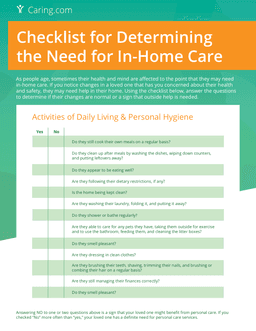
Aging can be a difficult process, and loved ones may not always ask for help – oftentimes it’s up to their family to evaluate their need for help around the house. While no two situations are exactly alike, this checklist can help you and your loved ones determine when it’s time to start the search for a home care provider.


Guidelines for Talking About In-Home Care
If you’ve determined that your loved one needs the assistance of a care provider in their home, it may be time for a difficult conversation. Handled correctly, however, this process can bring a family together and ensure that everyone’s concerns are addressed. Use this PDF as a starting point to help the conversation stay as positive and productive as possible.


Frequently Asked Questions
Reviews of Care Providers Nearby
Home Care
Allen
5.0
Review of Premier Home Care
Premier home care and my caregiver have always been taken care of my every need. They go above and beyond with everything they do. I'm so grateful for my caregiver
Home Care
Katherine01
5.0
Review of Premier Home Care
I am a client with premier home care. The level of care that their caregivers put into their work has made such a difference in my life. She really puts her heart into what she does.
Home Care
Beth24
5.0
Review of Premier Home Care
Premier provided me with an amazing caregivers. Jaylynn is as good as they come. She goes above and beyond in all she does for us. She always pays attention to detail and puts quality behind her...