.png&w=256&q=75)
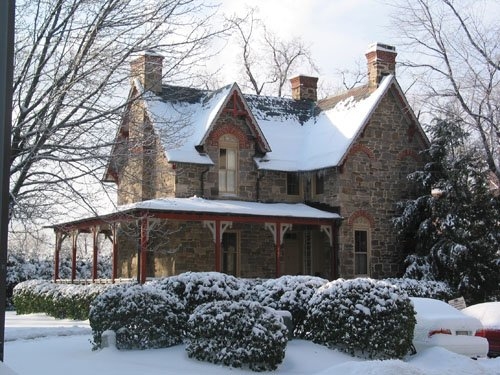
Roland Park Place
830 W 40 Street, Baltimore, MD, 21211
4.8
(24 reviews)
"Roland Park Place offers over 20 different floor plans in Independent Living including 4 residences within the beautiful and historic Greenw..."
READ MOREThe historic city of Baltimore is located on the estuary of the Patapsco River in Maryland. It has a population of 593,490, with approximately 14.5% of its residents aged 65 and over. Seniors in the city have access to excellent medical care at the world-renowned Johns Hopkins Hospital, which is nationally ranked in 15 procedures by U.S. News and World Report. Other notable medical facilities include the University of Maryland Medical Center and the Anne Arundel Medical Center.
Nursing home care provides 24/7 medical monitoring and care, as well as assistance with the tasks of daily living. It’s administered by teams of registered nurses and experienced caregivers, which can make it relatively expensive in most cities. According to the Genworth Cost of Care Survey 2020, the average monthly cost of care in a nursing home in Baltimore is $11,984 for a semiprivate room. The national average monthly cost of nursing home care is $7,756. Consequently, seniors living in Baltimore who don’t require that level of care should look at alternatives such as assisted living and home care services.
This guide looks at the costs of care in Baltimore and lists free resources for seniors.
74 Results
830 W 40 Street, Baltimore, MD, 21211

4.8
(24 reviews)
"Roland Park Place offers over 20 different floor plans in Independent Living including 4 residences within the beautiful and historic Greenw..."
READ MORE
1300 S. Ellwood Avenue, Baltimore, MD, 21224
4.4
(14 reviews)
"They have a way to make you feel welcome. If I could bring them home I would. Danielle the nurse and Angela the nurse was excellent. The have good personality. Carmicheal In Housekeeping does a job. I really miss her when she was out. she is friendly..."
READ MORE1046 South Northpoint Rd, Baltimore, MD, 21224
3.2
(29 reviews)
"Staff is phenomenal!! Candy especially took great care of my mother when she was there! I would recommend this facility to everyone!!..."
READ MORE
1601 E. Belvedere Avenue, Baltimore, MD, 21239
4.2
(10 reviews)
"I've been in this building almost 5 years. The staff has been good. Stacey the GNA does everything you need, she's just that type of person. She's here every morning and is very reliable, and Alisha, the nurse, works very hard. Ms. White is a great n..."
READ MORE2434 W. Belvedere Ave., Baltimore, MD, 21215
5.0
(3 reviews)
"My wife spent two weeks at Levindale Hebrew Geriatric Center and Hospital. Their care was exceptional. We found out what they needed to do to calm her down. It's a big hospital with a lot of patients. They have therapy. It's a 28-day program. The peo..."
READ MORE
601 Maiden Choice Lane, Baltimore, MD, 21228
5.0
(1 reviews)
"Little Sisters of the Poor - St. Martin's Home is a senior living provider located in Baltimore, MD. This community offers a variety of care..."
READ MORECaring's Family Advisors are here to help you with questions about senior living and care options.
5601 Loch Raven Blvd, Baltimore, MD, 21239
5.0
(1 reviews)
"My mom is in rehab right now. She is at Good Samaritan (MedStar Good Samaritan). It is very good. I have no complaints with the place. It is a nursing home/rehab facility. Everything that they did was fine. My mother is being well taken care of. The ..."
READ MORE
1000 N. Gilmore Street, Baltimore, MD, 21217
4.4
(5 reviews)
"I had 2 family members at Futurecare Sandtown. The staff was very friendly. The place smelled wonderful, better then other homes I have been in. Unit 2 treated my family like there own. Greatful for the team. ..."
READ MORE4700 Harford Rd, Baltimore, MD, 21214
3.6
(14 reviews)
"This is Ethel M. Abrims, a former patient of future care Coldspring. During my stay, I wish to express my gratitude to the beautiful women at future care that work diligently with me; in occupational and physical therapy. Starting with Catherine, ..."
READ MORE2300 DULANEY VALLEY RD, Baltimore, MD, 21093
3.6
(13 reviews)
"My father had a wonderful experience n the subacute Rehab. He had a very clean and comfortable private room. The staff were kind and attentive to all of his needs. The food was decent and was delivered with a smile each day. I would definitely send a..."
READ MORE725 Mount Wilson Lane, Baltimore, MD, 21208
4.3
(3 reviews)
"North Oaks is an exceptional retirement community. The building and grounds are beautiful and the staff are committed to the quality of life experience that they offer to their residents. ..."
READ MORE3320 Benson Avenue, Baltimore, MD, 21227
3.4
(12 reviews)
"My dad was there 2 years ago for PT-OT and they were great. We are back after a UTI-hospital stay. They got him all checked in at 4:00pm. Everyone was super nice. His dinner was the best chicken spaghetti I have had. From the CNA-nurse's-admin staff..."
READ MORE700 WEST 40TH STREET, Baltimore, MD, 21211
3.1
(14 reviews)
"Experienced Nurses! Every one of them. Top notch. Nurse assistants are very helpful. Because there are 3 different shifts, you will be subjected to different sets of Nurse Assistant personalities. You will have your favorites. Any job huh? Physical..."
READ MORE1300 Windlass Drive, Baltimore, MD, 21220
4.0
(2 reviews)
"Oakwood Care Center is a nice facility. The staff is friendly and seem to care about their patients. It’s conveniently located but doesn’t have much parking available. It’s paid for by Medicare right now. The cost is comparable to others...."
READ MORE1800 Orleans Street, Baltimore, MD, 21287
4.0
(1 reviews)
"We place my father-in-law at John Hopkins Rehab because that was the only rehab center that would cater to his stage of Alzheimer's. The staff is very nice and they were able to meet his needs. The facility is clean. This place is a temporary solutio..."
READ MORE5009 Frankford Ave, Baltimore, MD, 21206
4.0
(1 reviews)
"My Mom was in Lorien for rehabilitation services. The staff and faculty there treated her like gold. They were friendly, knowledgeable, and helpful. ..."
READ MORE
2327 N. Charles St., Baltimore, MD, 21218
3.6
(5 reviews)
"I came to Future care Charles Village at the beginning of January, and I've found that three specific staff members standout. Angie, Danielle and Mike are all excellent, and do whatever they can for me. The therapy offered is really good, and they’ve..."
READ MORE
22 South Athol Avenue, Baltimore, MD, 21229
3.1
(11 reviews)
"I stayed at the facility for a short time but in my short time I started Physical therapy and I gained the ability to walk and get back to my day to day life after surgery. The staff are very friendly and pleasant and made my stay very enjoyable. The..."
READ MORE
6600 Ridge Rd, Baltimore, MD, 21237
2.4
(12 reviews)
"Right now, my dad is at ProMedica Skilled Nursing and Rehabilitation (Rossville). Some of the nurses gave very good attention. However, some of them completely ignored my dad. They wouldn't even put hearing aids in his ears. There were some great one..."
READ MORE
6000 Bellona Avenue, Baltimore, MD, 21212
3.0
(3 reviews)
"I would first like to start out by saying how wonderful autumn lake at homewood is. The g.n.a's are absolutely awesome for the most part. The nurses are great. They do everything they can to make sure you get your medicine on time. The activities dep..."
READ MOREBaltimore’s average monthly cost for nursing home care is $11,984 for a semiprivate room and $12,805 for a private room.
Seniors may be interested to know how the cost of care in Baltimore compares to that of nearby cities. Using the average monthly cost of a semiprivate room as a reference point, the cost of care in Baltimore is significantly higher than the national average of $7,756 and slightly higher than the Maryland state average of $10,190.
The average monthly cost of care is lower in Maryland cities California ($8,137), Salisbury ($10,768), Hagerstown ($9,794) and Cumberland ($8,213) than it is in Baltimore.
Baltimore
$11,984
Maryland
$10,190
The United States
$7,756
California
$8,137
Salisbury
$10,768
Hagerstown
$9,794
Cumberland
$8,213
Seniors who are still undecided about which care option would best suit their needs may be interested to know the costs of care. The lowest cost option is adult day care, which has a monthly average cost of $1,896. Home care and home health care services carry average monthly fees of $4,671 and $4,957, respectively. Assisted living has a monthly average cost of $5,000. At the high end of the scale, nursing home care has an average monthly cost of $11,984 (for a semiprivate room) and $12,805 (for a private room).
Adult day care
$1,896
Home care
$4,671
Home health care
$4,957
Assisted living
$5,000
Nursing home semiprivate
$11,984
Nursing home private
$12,805
Many seniors and their families use some form of financial assistance to help them pay for nursing care. The main options available are Medicare, Medicaid, and veterans benefits. These programs can be complicated, especially when it comes to benefit terms. Below, we give a brief overview of how these programs may be used towards paying for skilled nursing care.
If these options aren’t available to you, check if your loved one has long-term care insurance or contact your Area Agency on Aging to ask about any local financial assistance programs for seniors.
The following resources may be of interest to seniors living in Baltimore who are not yet ready to make the move to nursing home care and are looking for services that can help them to safely age in place in their own homes. One resource provides information on state health insurance financial assistance options for seniors who are planning to move to a care facility in the near future.
| Resource | Contact | Service |
|---|---|---|
| SHIIP Baltimore | (410) 396-2273 | SHIIP is a program that provides free, unbiased information to seniors and their caregivers regarding the Maryland state health insurance system. The program is funded by the state of Maryland and the federal government. Volunteer counselors assist seniors by answering their questions regarding state health insurance and helping them to find the best plan to suit their particular requirements. In addition, counselors can assist seniors in applying for the financial assistance options and benefits that are available to seniors requiring short or long-term care in a nursing home. |
| Baltimore City Health Department In-Home Care Support | (410) 396-6006 | The Baltimore City Health Department offers a number of services to help seniors to safely age in place in their own homes. Services provided include assistance with everyday activities, family caregiver support, nurse monitoring, home-delivered meals and a senior companion program. The majority of the services are free of charge and carried out by qualified volunteers. Though some of the services do require seniors to cover the basic costs, financial assistance options are generally available. Seniors need to apply for the services and be evaluated by staff members to see if they qualify for assistance. |
| Maryland Department of Aging | (866) 502-0560 | The Maryland Department of Aging offers a free wellness check program for resident seniors over the age of 65. Volunteers call each day at a time specified by the senior to see whether any assistance is needed due to mental or physical issues. Participating seniors must provide an alternate contact number for a person who is able to carry out a physical check on the senior if the primary participant can’t answer the phone. Volunteers call non-emergency services to check on the senior if neither the participant or the alternate contact number respond. |
Nursing Homes
Thomas
3
Review of FutureCare - Lochearn
My mother is in FutureCare - Lochearn. It's a nice community. They take care of her pretty well. Some of the staff are OK. The food looks pretty good. It's a great big building. It was a cathedral...
Nursing Homes
Sylvia
4
Review of Future Care Irvington
My friend moved to Future Care Irvington and they were good and adequate. We chose it because she went from there to the hospital, and then to their rehab. So, it was convenient and it was nice....
Nursing Homes
Joy
1
Review of Good Samaritan Nursing Center
The staff spend more time hating on each other than they do caring for the residents. A woman was in tears because she asked for someone to take her to the bathroom just after midnight and ten...