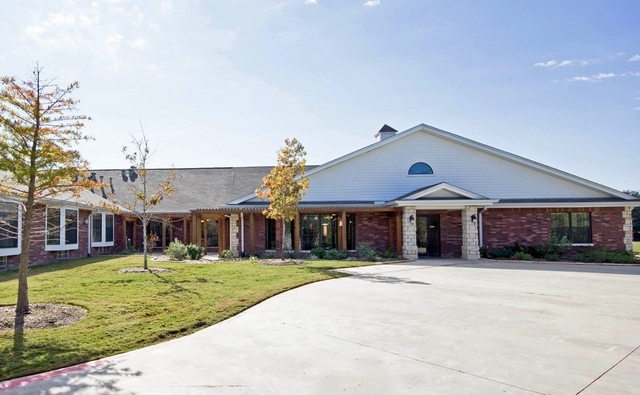
Assisted Living Facilities in College Station, Texas

We found 21 assisted living facilities near College Station, TX. Read reviews, check ratings and pricing, get contact information, and learn about senior living options, amenities, and events offered by browsing the College Station assisted living providers listed below.

21 College Station, Texas, Assisted Living Facilities
Sort by:

  1.  28625
    4.7
    Silver Hills
    Montgomery, TX 77316
    "I chose Silver Hills because it was so close to me. It's like 25 minutes away from my home. They ..." more

  2. Silver Oak On The Brazos, LP
    College Station, TX 77845

    Bluebonnet House
    College Station, TX 77845

    Isle of Watercrest
    College Station, TX 77845

  3. 0.0
    Waldenbrook Estates
    Bryan, TX 77802


    St Joseph Manor
    Bryan, TX 77802


    0.0
    Millican House
    Bryan, TX 77802

    Dansby House Inc
    Bryan, TX 77803


    0.0
    Seasons on Water Street
    Navasota, TX 77868
    "The Seasons on Water Street is a Type B Personal Care Home, licensed by the Stat" more


    Argent Court
    Brenham, TX 77833

    Madisonville Care Center
    Madisonville, TX 77864


    0.0
    Arbors of Briarwood
    Bellville, TX 77418

    V S Brown House
    Waller, TX 77484

    0.0
    Rose Hill Retirement Home Inc
    Bellville, TX 77418

CaringScore

Overview HealthScore: 7 CostScore: 7 LivabilityScore: 4.4
6.3
of 10

CaringScore for College Station, TX

CaringScore was designed to help millions of Americans find the best places to retire, age in place, or receive eldercare. The CaringScore for assisted living facilities in College Station was based on more than 50 factors in three key categories: health, cost, and livability. By compiling and analyzing this data, Caring.com is able to rate the quality of life you or a loved one might expect should you choose assisted living facilities in College Station.

CaringScore can range from 1 (worst) to 10 (best), and provides a quick way to compare cities, counties, and even specific zip codes. With a CaringScore of 6.3, College Station rates above average for those seeking assisted living facilities.

The charts below highlight a few of the factors we used to calculate the CaringScore for College Station. Choose a category score to learn more.

7
of 10

HealthScore for College Station, TX

HealthScore, a component of the overall CaringScore for assisted living facilities in College Station, rates a region on a scale of 1 (less healthful) to 10 (more healthful). It's specifically tailored to anyone looking for assisted living facilities. The HealthScore for College Station is based on the availability of healthcare resources, air and water quality, the overall health of the local population, and other key factors. With a HealthScore of 7, College Station rates above average for those seeking assisted living facilities.

Easy access to physicians -- especially geriatricians and other key specialists -- is important to older adults seeking assisted living facilities. At 214.8 physicians per capita, College Station closely matches the national average. College Station trails the national average in geriatricians per capita by 53.8 percent, with 0.6, and closely matches the national average in specialists per capita, with 17.5. These medical specialists include cardiologists, oncologists, and orthopedists. The average life expectancy from birth in College Station is 78.7 years -- 1.0 percent higher than most of the country. Air quality in College Station -- one factor in gauging the healthfulness of a region -- is average, and water quality -- another key measure of College Station's environmental health -- is 81.8 percent above average.

Doctors Per Capita College Station, TX Nat'l Avg
Physicians 214.8 220.5
Geriatricians 0.6 1.3
Cardiologists 6.8 7.7
Oncologists 2.8 3.5
Orthopedists 7.3 7
7
of 10

CostScore for College Station, TX

CostScore, part of the overall CaringScore for assisted living facilities in College Station, rates the cost of living for older adults on a scale of 1 (more expensive) to 10 (less expensive). It's specifically tailored to people looking for assisted living facilities. The CostScore for College Station is based on data such as the average monthly cost of assisted living facilities in the region, cost of living indices such as housing and healthcare, regional tax rates, and other key factors. With a CostScore of 7, the costs associated with assisted living facilities in College Station are generally less expensive than the national average.

The average monthly cost for assisted living facilities in College Station is $3,000 , which is 8.0 percent less expensive than the rest of the country. Overall, the cost of living for College Station indexes at 6.0 percent lower than the national average. Average healthcare costs are 10.0 percent cheaper than the national average, and the cost of housing index is 105 of 10, which mirrors the rest of the country.

Cost of Living College Station, TX
Aggregate Index 94
Healthcare Index 90
Housing Index 105
Food Index 85
Utilities Index 91
Transportation Index 101
4.4
of 10

LivabilityScore for College Station, TX

LivabilityScore makes up part of the overall CaringScore for assisted living facilities in College Station. On a scale of 1 (less livable) to 10 (more livable), it's a rating of the quality of life in a region, specifically tailored to those looking for assisted living facilities. The LivabilityScore for College Station is based on weather, crime rates, economic factors, average age of the population, and other key demographics. With a LivabilityScore of 4.4, College Station rates below average for assisted living facilities.

Weather is an important factor in choosing the best place for assisted living facilities. The sun shines an average of 209 days each year in College Station, which is about average in the U.S. With an average temperature of 40°F in January, winters tend to be milder in College Station than in other parts of the country, and summers are often hotter than other places, averaging 95°F in July.

Local crime rates are another important indicator. The violent crime rate in College Station is 25.0 percent higher than the national average, and the property crime rate is 25.0 percent higher than average. At $31,192 per year, the population of College Station earns a lower than average median household income. College Station has an unemployment rate of 5.20 percent, roughly 42.9 percent lower than the national average. And about 5.15 percent of the population in College Station is of retirement age -- 65 or older -- which trails the national average by 60.9 percent.

Amenities Per Capita College Station Nat'l Avg
Parks 0 136.1
Libraries 2.3 18.8
Places of Worship 70.2 220.5
Public Transit 164.9 110.4
Grocery Stores 52.9 97.7
Pharmacies 7.1 13.8

Find Assisted Living Facilities Nearby

More Information About Assisted Living Facilities

  • Caring Checklist: Evaluating an Assisted-Living Facility for Someone With Alzheimer's
    Article - Choosing an assisted-living facility for someone with Alzheimer's can seem overwhelming. This checklist will help you ask the right questions. - Choosing an assisted-living facility for someone with Alzheimer's can seem overwhelming. This checklist will help you ask the right questions.
  • The Adult Diaper Wars: A Call to Arms!
    Blog Post - A Canadian government official's threat to wear diapers triggers open talk of how to keep seniors who wear diapers comfortable and healthy. - A Canadian government official's threat to wear diapers triggers open talk of how to keep seniors who wear diapers comfortable and healthy.
  • Is it time to consider assisted living for my elderly mother?
    Question - ...as numerous medical problems including anxiety disorder. She is fine when feeling well, but uncontrollable when falls ill. Is it time for assisted living?
  • Dementia Patients Seem to Benefit From Small Group Homes
    News - FRIDAY, Sept. 16 (HealthDay News) -- People with dementia appear to be better off in small group homes rather than large nursing homes because they offer a domestic environment where patients can live as individuals, new research suggests.