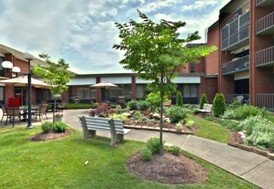
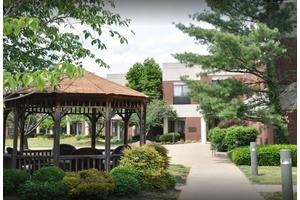
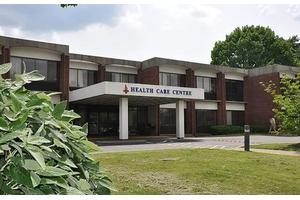
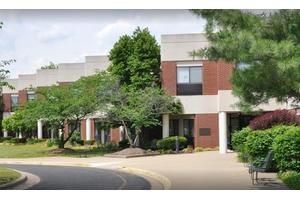
We found 6 continuing care communities near Louisville, KY. Read reviews, check ratings and pricing, get contact information, and learn about housing options, amenities, and events offered by browsing the Louisville CCRCs listed below.
CaringScore
CaringScore for Louisville, KY
CaringScore was designed to help millions of Americans find the best places to retire, age in place, or receive eldercare. The CaringScore for continuing care retirement communities in Louisville was based on more than 50 factors in three key categories: health, cost, and livability. By compiling and analyzing this data, Caring.com is able to rate the quality of life you or a loved one might expect should you choose continuing care retirement communities in Louisville.
CaringScore can range from 1 (worst) to 10 (best), and provides a quick way to compare cities, counties, and even specific zip codes. With a CaringScore of 6.5, Louisville rates above average for those seeking continuing care retirement communities.
The charts below highlight a few of the factors we used to calculate the CaringScore for Louisville. Choose a category score to learn more.
HealthScore for Louisville, KY
HealthScore, a component of the overall CaringScore for continuing care retirement communities in Louisville, rates a region on a scale of 1 (less healthful) to 10 (more healthful). It's specifically tailored to anyone looking for continuing care retirement communities. The HealthScore for Louisville is based on the availability of healthcare resources, air and water quality, the overall health of the local population, and other key factors. With a HealthScore of 6.8, Louisville rates above average for those seeking continuing care retirement communities.
Easy access to physicians -- especially geriatricians and other key specialists -- is important to older adults seeking continuing care retirement communities. At 348.4 physicians per capita, Louisville scores 58.0 percent better than the national average. Louisville scores about average in geriatricians per capita, with 1.2, and scores 82.6 percent better than the national average in specialists per capita, with 35.6. These medical specialists include cardiologists, oncologists, and orthopedists. The average life expectancy from birth in Louisville is 76.4 years -- 1.9 percent lower than most of the country. The average life expectancy from birth in Louisville is 76.4 years -- 1.9 percent lower than most of the country. and water quality -- another key measure of Louisville's environmental health -- trails the national average by 76.4 percent.
| Doctors Per Capita | Louisville, KY | Nat'l Avg |
|---|---|---|
| Physicians | 348.4 | 220.5 |
| Geriatricians | 1.2 | 1.3 |
| Cardiologists | 14.4 | 7.7 |
| Oncologists | 6.4 | 3.5 |
| Orthopedists | 13.6 | 7 |
CostScore for Louisville, KY
CostScore, part of the overall CaringScore for continuing care retirement communities in Louisville, rates the cost of living for older adults on a scale of 1 (more expensive) to 10 (less expensive). It's specifically tailored to people looking for continuing care retirement communities. The CostScore for Louisville is based on data such as the average monthly cost of continuing care retirement communities in the region, cost of living indices such as housing and healthcare, regional tax rates, and other key factors. With a CostScore of 8.6, the costs associated with continuing care retirement communities in Louisville are generally less expensive than the national average.
Because of the broad range of housing, service, and healthcare options available at continuing care retirement communities, no average monthly cost data is available for Louisville. The entry fee or purchase price for an independent living community can range from $50,000 to $500,000 or more, and typically requires an additional monthly service fee of $1,000 to $3,000 on average. The cost of living indices below provide the best proxy for comparing costs of continuing care retirement communities in Louisville to the rest of the country. Overall, the cost of living for Louisville indexes at 15.0 percent lower than the national average. Average healthcare costs are 15.0 percent cheaper than the national average, and the cost of housing is 38.0 percent less expensive than average.
| Cost of Living | Louisville, KY |
|---|---|
| Aggregate Index | 85 |
| Healthcare Index | 85 |
| Housing Index | 62 |
| Food Index | 84 |
| Utilities Index | 101 |
| Transportation Index | 99 |
LivabilityScore for Louisville, KY
LivabilityScore makes up part of the overall CaringScore for continuing care retirement communities in Louisville. On a scale of 1 (less livable) to 10 (more livable), it's a rating of the quality of life in a region, specifically tailored to those looking for continuing care retirement communities. The LivabilityScore for Louisville is based on weather, crime rates, economic factors, average age of the population, and other key demographics. With a LivabilityScore of 3.3, Louisville rates below average for continuing care retirement communities.
Weather is an important factor in choosing the best place for continuing care retirement communities. The sun shines an average of 193 days each year in Louisville, 5.9 percent fewer sunny days than the rest of the U.S. sees. With an average temperature of 25°F in January, winters tend to be milder in Louisville than in other parts of the country, and summers are often hotter than other places, averaging 88°F in July.
Local crime rates are another important indicator. The violent crime rate in Louisville is 50.0 percent higher than the national average, and the property crime rate is 50.0 percent higher than average. At $33,033 per year, the population of Louisville earns a lower than average median household income. Louisville has an unemployment rate of 10.40 percent, roughly 14.3 percent higher than the national average. And about 14.40 percent of the population in Louisville is of retirement age -- 65 or older -- which matches the national average.
| Amenities Per Capita | Louisville | "Nat'l Avg" |
|---|---|---|
| Parks | 0.9 | 136.1 |
| Libraries | 2.5 | 18.8 |
| Places of Worship | 85.6 | 220.5 |
| Public Transit | 120.5 | 110.4 |
| Grocery Stores | 90.9 | 97.7 |
| Pharmacies | 16.2 | 13.8 |
Find Continuing Care Retirement Communities Nearby
More Information About Continuing Care Retirement Communities
-
Continuing Care Retirement Checklist
Article - When choosing a continuing care retirement community or helping the person you're caring for find one, here's what to look for. - ...rators discourage you from talking to current residents, this may be a red flag.) Get lots of details about cost. Fees and expenses for continuing care retirement communities vary. Be sure you understand all the details of what it'll cost when you move in -- and years into the future. The whole idea behind co... -
7 Ways to Find Bargains in Senior Housing
BlogPost - High vacancy rates in senior housing facilities lead to deep discounts: 10 Tips for Finding Bargains - ...maller residential facilities may be more flexible on this point. Ask about deferring entrance fees. The enormous entrance fees charged by continuing care retirement communities, which can come to hundreds of thousands of dollars, are meant to pay upfront for the health services that most seniors will need to access as... -
How can I get my parents to simplify their affairs before something happens?
Question - Unfortunately, free will is really powerful. I don't have the exact same situation as you, but there are so many things I try to convince my parents to do for their own good. They basically smile and nod then do what they want. It sounds like your parents are in the same boat...