

The Best Medical Alert Systems of 2024
Reviewed by: Christopher Norman, GNP | LinkedIn
Written by: Rachel Lustbader | LinkedIn

- Plans Start at $29.95
- Free Shipping & Activation
- No Long-Term Contract

- Starts at $24.95
- Free Shipping + Free Month on Select Plans
- 30 Day Risk Free Trial

- Starts at $24.99
- Free Fall detection
- No Contracts
We created this guide to help seniors and their loved ones choose a reputable and affordable medical alert company. Our team spent over 400 hours researching medical alert system options, conducting hands-on testing, and consulting with experts to determine the best medical alert systems available today. Below, we provide details about the top 10 medical alert companies and their devices, explain common medical alert features, offer advice for choosing the right medical alert system, and answer frequently asked questions so you can feel confident you’re choosing the best device for you.
At a Glance: The Best Medical Alert Systems
- MobileHelp – Most Affordable In-Home System
- LifeFone – Best Battery Life
- Bay Alarm Medical – Best for Customer Service
- Medical Guardian – Best Medical Alert Smartwatch
- ResponseNow– Best for No Startup Fees
- Medical Care Alert – Best Emergency Call Center
- Aloe Care – Most Affordable On-the-Go System
- Medical Alert – Best Caregiver Support Tools
- GetSafe – Best Hands-Free System
- Lifenet– Best for Free Fall Detection
| Overview Of The Top Recommended Medical Alert Systems | ||
|---|---|---|
|
Most Affordable In-Home System

|
MobileHelp
|
See Packages → Read Our Review → |
|
Best Standalone Mobile App

|
LifeFone
|
See Packages → Read Our Review → |
|
Best for Customer Service

|
Bay Alarm Medical
|
See Packages → Read Our Review → |
|
Editor’s Choice

|
Medical Guardian
|
See Packages → Read Our Review → |

|
ResponseNow
|
See Packages → Read Our Review → |
|
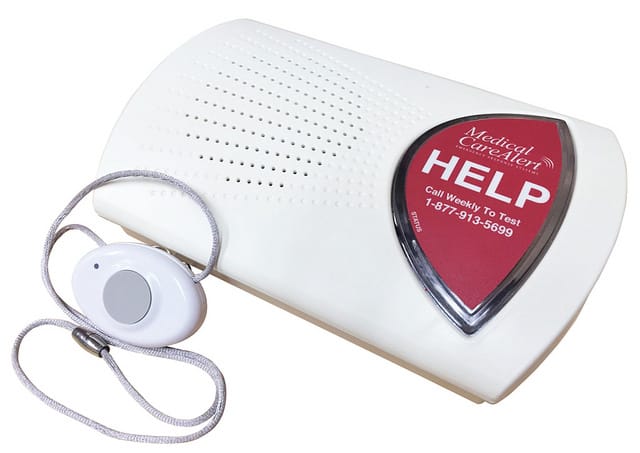
MedicalCareAlert
|
See Packages → Read Our Review → |
|
Best for Seniors Who Don’t Want to Wear a Pendant

|
Aloe Care
|
See Packages → Read Our Review → |
|
Best Hands-Free System

|
GetSafe
|
See Packages → Read Our Review → |

|
Lifenet
|
See Packages → Read Our Review → |
How We Chose the Best Medical Alert Systems
Our team identified the top 22 medical alert companies based on device offerings and online reviews and evaluated them for cost, feature and device availability, and reliability and reputation. We divided our criteria into five main categories (“core metrics”) and 29 subcategories (“sub metrics”) to determine a score for the companies and then ranked them in order of the scores. We included those that ranked in the top ten places as the ten medical alert companies on our list to deliver a data-driven compilation of the best medical alert systems for seniors and their loved ones. Our guide was then reviewed by Christopher Norman, Geriatric Nurse Practitioner, for accuracy.
Core Metric Overview
- In-Home Systems Cost and Capabilities: 20%
- Mobile Systems Cost and Capabilities: 25%
- Reliability and Reputation: 25%
- Extra Features and Add-On Devices: 15%
- Fees and Contracts: 15%
Read our full Methodology for a detailed explanation of how we ranked and chose the nine best medical alert systems.
Compare The Best Medical Alert Systems

Interested In a Medical Alert Watch?
This page reviews in-home and portable medical alert pendants, wristbands, and mobile units, but does not include smartwatches. For information on medical alert smartwatches, read our review of The Best Medical Alert Watches.
While all companies listed on this page offer high-quality medical alert systems and monitoring service, there are some differences between them all. Importantly, the available features will vary depending on which company you choose. Beyond emergency monitoring and 24/7 live support, the other capabilities of the systems do differ. We created this table below so you can easily see which companies offer systems equipped with the features you’re looking for. For a further explanation into the various features offerred by life alert devices, check out our section on Understanding Medical Alert System Features.
Expert Reviews of the Best Medical Alert Systems
Most Affordable In-Home System
MobileHelp earns a top spot for offering a wide array of reliable personal emergency response systems and the most affordable home medical alert system among all companies we reviewed. With a five-star rating overall, MobileHelp has outstanding performance in many categories, including ranking first in In-Home Systems and Availability of Add-On Services. . It also ranked third with a 4.5 star rating in the Reliability and Reputation category thanks to its strong online reviews.
If you’re looking for a budget-friendly in-home medical alert system, MobileHelp’s Classic System is an excellent place to start. For the low monthly price of $19.95, you get the base in-home unit and a water-resistant help button. Unlike other companies, MobileHelp’s base unit with 24/7 monitoring doesn’t require a landline connection. Overall, the combination of quality devices and affordable pricing makes MobileHelp one of the best medical alert systems.

Most Affordable In-Home System

Pros and Cons
Pros:
- No need for a landline with any device
- No extra charge for cellular connection
- Range of premium features
Cons:
- Some customers will need to pay an activation fee
- Fall detection not available for all devices
Pricing and Plans
*Base stations and wall buttons are not waterproof. The fall button and mobile device are water-resistant for wearing in the shower. The neck pendant and wrist button are waterproof.
The price range for MobileHelp’s personal emergency response systems starts from $19.95 to $54.95 a month, and you can make monthly, quarterly, semi-annual, or annual payments. You can get free shipping by opting for quarterly, semi-annual, and annual payments. Otherwise, you’ll pay $15 for shipping if you go for monthly plans. Note that in addition to offering free shipping, long-term payment plans are also cheaper than monthly payments overall due to slight discounts.
Although the MobileHelp Classic starts at the low monthly price of $19.95, you’ll have to pay an additional one-time processing fee of $49.95. The processing fee only applies to the MobileHelp Classic monthly plan; other plans (i.e., quarterly, semi-annual, annual) don’t have such a fee. All customers are eligible for MobileHelp’s 30-day free trial period for all devices.
What Customers Are Saying About MobileHelp
MobileHelp’s excellent customer service and budget-friendly pricing resonated well with customers. The majority of the company’s online reviews were positive. Below are some of the things real customers have said about MobileHelp:
I am pleased with this device. It is accurate and easy to use. The people we have talked to have been courteous and knowledgeable. We have called them several times and gotten all the answers. I also have told other people about it. – Howard of Westwood, NJ via Consumer Affairs
Once I requested information I received a phone call within five minutes. She was able to explain all the different options in detail and how it works. I had talked to a couple of different companies and didn’t get a detailed description as I did with MobileHelp. – Catherine G via Google Reviews
I received so much help from Patrick in purchasing my monitoring system today. His questions about my lifestyle told him what I needed and that’s what I bought/ A truly wonderful shopping experience. – Diane V via Google Reviews
Contact MobileHelp for a Quote Get Quote
Our in-depth review on MobileHelp Read Review
Comparison of the top medical alert systems Get Details
Best Battery Life

Earning a five-star rating, LifeFone makes a strong case as one of the best medical alert brands for its competitively-priced devices, excellent battery life, affordable caregiver tools, and strong value proposition. It ranked in the top five for all of our ranking categories and performed particularly well in On-the-Go Systems and Availability of Add-On Services. LifeFone’s VIPx On-the-Go device is one of the best mobile medical alert systems available. Starting at $45.95 per month, the VIPx boasts a lightweight profile, a notable 16 days of battery life, advanced location technology, and access to the VIPx Caregiver App.
Not only does LifeFone offer many add-on services, but it keeps these premium caregiver tools and services affordable. For example, the optional Medication Reminders service tells medical alert system users which medication to take and when for only $6 per month. Overall, LifeFone is a solid choice for a medical alert system that delivers the best bang for your buck, thanks to its affordable in-home and mobile devices, no activation and equipment fees, and reasonably-priced caregiver tools.

Best
Mobile App
Pros and Cons
Pros:
- Large range on in-home devices
- Variety of services help users feel protected in every situation
- No long-term service contract or extraneous startup fees
- Free monitoring for a second family member/person who lives in the same household
- Offers a new GPS smartwatch device with step tracker, heart rate monitoring, and optional fall detection
Cons:
- Additional fees apply for add-on options that some other companies offer for free
- Shorter than average battery life
Pricing and Plans
At-Home Landline
At-Home Cellular
At-Home & On-the-Go
VIP Active
VIPx
Smartwatch Active
Monthly Cost
$29.95
$34.95
$39.95
$43.95
$45.95
$49.95
Type of Device
In-home system
In-home system
In-home and mobile system
Mobile system
Mobile system
GPS smartwatch
Connection
Landline
Cellular
Cellular
Cellular
Cellular
Cellular, Wi-Fi
Battery Life
32-hour backup
32-hour backup
24 hours mobile; 30-hour backup in-home
30 days
16 days
Up to 24 hours
WaterResistant
Yes*
Yes*
Yes*
Yes
Yes
Yes
Range
1,300 feet
1,300 feet
1,400 feet in-home, 600 feet mobile
N/A
N/A
N/A
Fall Detection
$5 a month
$5 a month
$10 a month
$5 a month
$5 a month
$5 a month
*The help button and fall detection pendant are water resistant.
LifeFone offers an impressive selection of six medical alert devices, including a new GPS-based smartwatch. Each device comes with three different payment plans: monthly, quarterly, and annual. If you’re planning to use the device long-term, you should opt for the quarterly and yearly plans since they include minor discounts and freebies. The quarterly payment option includes free shipping and one free month, while the annual plan gives free shipping, one free month, and a free lockbox.
LifeFone also provides a 30-day risk-free trial where you may return its products within 30 days and receive a full refund. You’re free to cancel your plan at any time without penalties.
What Customers Are Saying About LifeFone
Despite an A+ BBB rating, LifeFone has a customer reviews rating of only 1.5 out of 5.0 – but with only two reviews, the ratings are easily skewed. Meanwhile, LifeFone has relatively good ratings from places like Consumer Affairs and Trustpilot, with mostly positive user reviews. Here’s what people had to say about the company:
My mother was always comforted by the voice who answered and called her by name. Luckily she never had to use it in an emergency but faithfully tested it monthly. – Sandra via TrustPilot
We have had at least 2 dozen incidents due to my stroke and they have always responded quickly and notified my family very very expeditiously. Great and personable customer service. – James of Dallas, TX via Consumer Affairs
Saved my life more than once! Respond quickly & EMS arrives fast. Phone personnel are always courteous! – Vickie via Trustpilot
Contact LifeFone for a Quote Get Quote
For more, read our in-depth review on LifeFone Read Review
For a comparison of the best medical alert systems Get Details
Bay Alarm Medical Review
Best Customer Service
With an overall rating of 4.5 stars, Bay Alarm Medical is one of our best medical alert systems for its high-quality but affordable home and mobile medical alert systems, best-in-class response times, and top-notch customer service. It’s the top-ranking company in our Reliability and Reputation category, with a 10 seconds response time, a free trial period, and a transparent and easy-to-navigate website. Moreover, Bay Alarm Medical is a top-five brand in the Availability of Add-Ons category for its wide selection of extra devices and features such as fall detection buttons, wall buttons, a lock box, and a vial of life.
With its simple and easy-to-use devices and commitment to excellent customer service, Bay Alarm Medical is a great choice for first-time buyers of medical alert systems.

Best For Customer Service
Pros and Cons
Pros:
- Geofencing available
- Monitoring service is available in 170 languages
- On the Road provides excellent coverage for seniors who drive
- Change or cancel plans at any time
Cons:
- Limited accessories compared to other companies
- Most plans include basic coverage and will cost more as features are added on
Pricing and Plans
*Automatic crash detection is included
Bay Alarm Medical’s four devices range from $19.95 per month for the basic home medical alert system to $29.95 per month for the SOS Smartwatch device. All Bay Alarm Medical devices have monthly payments, but you may choose to pay every quarter or annually without discounts. You may cancel anytime, and if you’re on quarterly or yearly billing, the company will refund you for the unused months. There’s a risk-free 30-day trial period where you can use the device, return it if you decide it’s not for you, and receive a full refund minus shipping costs.
What Customers Are Saying About Bay Alarm Medical
Ranking first in our Reliability and Reputation category, Bay Alarm Medical enjoys plenty of positive reviews from customers. Here are what actual customers had to say about this company:
Excellent service. I get an email every time there’s any service outage (power, phone, etc). My mother has successfully used Bay Alarm twice to call an ambulance. – Cassandra A via BBB
I called Tech Support with a mobile app question. John A. was extremely kind, helpful, and thorough. He walked me through the complete process of setting up and testing my new alert system. Thanks a lot, John! You were a BIG help. I hope everybody else at Bay Alarm is as supportive as you. – James of Los Angeles, CA via Consumer Affairs
Got this for my mother-in-law. She had an incident where she fell and laid on the floor for five hours before she finally managed to get to her cell phone. After this incident, I was afraid to go out and sit on the porch or just walk around her home. Now wearing the necklace feels safe and secure and will sit on her porch again. – Linda via TrustPilot
Contact Bay Alarm Medical for a Quote Get Quote
Our in-depth review on Bay Alarm Medical Read Review
Comparison of the top medical alert systems Get Details
Best Medical Alert Smartwatch
Medical Guardian earned a top spot in our rankings for offering high-quality, versatile at-home devices, a wide array of add-on options, and the most technologically-advanced medical alert smartwatch. With a 4-star rating overall, Medical Guardian scored high in many key categories, including In-Home Systems and Availability of Add-Ons. The basic Classic Guardian unit starts at $29.95 per month featuring 1,300 ft of range and up to 32 hours of the backup battery. The company also offers several additional features, including a fall detection pendant, a lock box, a wireless wall button, and a one-button speaker box.
However, Medical Guardian’s most notable device is the MGMove Smartwatch. This wearable medical alert smartwatch includes advanced features like activity tracking, a built-in messaging system, a dedicated SOS button, calendar notifications, etc. Overall, Medical Guardian is worth checking out for its diverse device lineup, top-tier mobile devices, and wealth of additional features.

Editor’s Choice
Editor’s Choice
Pros and Cons
Pros:
- Wide variety of device options, including a highly-advanced smartwatch
- Availability of premium features
- Free caregiver portal
- No device or activation fees (other than Freedom Guardian smartwatch device)
Cons:
- On-the-go devices are pricier than the industry average
- Some customers must pay for shipping
Pricing and Plans
* One-time device cost of $124.95
**One-time device cost of $199.95
Medical Guardian lets you choose from five different devices, ranging from $29.95 to $39.95 per month. Then, every device gives you three different payment options: Monthly, Quarterly, and Annual plans. Choosing the Annual payment plan will get you a few dollars off the base monthly price, one free month of service subscription, and free ground shipping. Otherwise, you’ll have to pay $12.50 for shipping.
However, some devices like the Home 2.0, Mini Guardian, and Mobile 2.0 require equipment fees ranging from $124.95 to $149.95. Similarly, the MGMove smartwatch package comes with a $199.95 equipment fee.
What Customers Are Saying About Medical Guardian
Despite ranking in the top ten for the Reliability and Reputation category and an A+ BBB rating, Medical Guardian online reviews are a mixed bag. While it did have plenty of positive reviews on Consumer Affairs, the company received mainly negative reviews on TrustPilot, with customer service being a common sore spot. Below are the comments of actual customers:
The individuals I dealt with were very kind and answered questions so that I understood. I received the Medical Guardian equipment in a short period of time. I dropped it (in Indiana). One always wonders if there will be an immediate response if needed. I had one. While in Florida, I dropped it (arthritic hands). I received another immediate response. It is a great travel companion. I consider this purchase a success. – Karen of Sullivan, IN via Consumer Affairs
The issue I’ve had as a caregiver for my mom is the App… It is too hard to access and won’t even open up most of the time. Read the App Store reviews for more details. The unit itself is great and so easy to Use and there was no installation. Just charge it up and go! – Sean of Boulder Creek, CA via Consumer Affairs
Trying to return this device who is extremely difficult and I continue to get billed after it was returned. After many calls to customer service I still was not satisfied. A $50 restocking fee is charged even after you’ve had a device for over two years. Not right. – Paul Bacher via TrustPilot
Monitoring and Cellular Provider
Medical Guardian uses a U.S.-based, third-party monitoring service. It is certified by The Monitoring Association (TMA) and is a member of the Electronic Security Association.
Medical Guardian cellular devices use AT&T’s network to connect with the monitoring center. You can connect with the monitoring center anywhere in the United States with cellular service.
To contact Medical Guardian for a quote Click Here
For more, read our in-depth review on Medical Guardian. Read Review
For a comparison of the best medical alert systems Click Here
Best for No Start-Up Fees
If you’re looking for a medical alert system without the hefty activation and equipment fees, it’s hard to go wrong with ResponseNow. It’s one of our top ranking companies in the Extra Costs category because it waives all equipment, activation, and shipping fees. Plus, ResponseNow doesn’t lock you in a long-term contract, and even offers prorated refunds for unused months. ResponseNow’s traditional console-and-pendant unit, In The Home, includes 24/7 monitoring, 500 feet range, optional fall detection, and starts at $29.95 per month.
In addition, ResponseNow ranks 2nd in our On-the-Go Systems category, thanks to its excellent Belle and Belle X portable devices. These shower-safe, two-way speaker-and-microphone devices work with 4G LTE cellular connection and include built-in fall detection (only Belle X), making them ideal for active seniors. ResponseNow stands out for its transparent pricing, lack of extra costs, and top-shelf mobile devices.

Best For
Best for No Startup Fees
Pros and Cons
Pros:
- No equipment or activation fees on all bundles
- High-quality mobile device with built-in fall detection
- No long-term contracts
Cons:
- Limited selection of add-ons
- No caregiver portal and mobile app requires a monthly fee
Pricing and Plans
In The Home
Belle
Belle X
Monthly Cost
$29.95
$39.95
$49.95
Type of Device
In-home system
Mobile system
Mobile system
Connection
Landline
Cellular
Cellular
Battery Life
24-hour backup
Up to 30 days
1-2 weeks
Water Resistant
Yes
Yes
Yes
Range
500 feet
Unlimited with cellular coverage
Unlimited with cellular coverage
Fall Detection
$11.95 a month
Built-in
Built-in
What Customers Are Saying About ResponseNow
ResponseNow has an A+ BBB Rating and a single 5-star review. While its online reviews are very few and far between, they’re mostly positive. Here are some reviews we’ve found for the company:
ResponseNow has been a large source of comfort for me seeing as though my grandmother and mother live out of state and both have health issues that put them at risk of falling. Will has been really lovely and helpful to communicate with. I only trust ResponseNow with my family! – Ashton R. via Google Reviews
I have had a Response Now Medical Alert pendant for about four years. I use it about once every two to three months to check in and tell them I am OK. Very nice, and helpful. Twice, my electricity went off with storms. My ICE people were called right away. I told them I was OK. Response is fast. I like this company very much. – Jean via BestCompany
Love it. Love the company. Agents are SUPER helpful. Had a situation that wasn’t an emergency to anyone else but me. The agents helped me through it without embarrassment. Thank you so much. – Sue T. via Amazon
Our in-depth review on ResponseNow Read Review
Comparison of the top medical alert systems Get Details
Best Emergency Call Center
With an overall 4-star rating, Medical Care Alert is an excellent choice for quality emergency response. Medical Care Alert stands out because its call center agents are all EMT/EMD-Certified, fluent in English and Spanish, and trained to respond to emergencies and dispatch services. During the emergency, the agent will also text and call to notify your preferred contacts. Since your personal profile is already on file as you sign up, Medical Care Alert agents know precisely who you are, your location, and who to call. Combined with the 30-second average response time, Medical Care Alert has one of the best emergency call centers in the industry.
Medical Care Alert also scored high in our Extra Costs category since you don’t have to pay for activation and equipment fees. In addition, Medical Care Alert ranked 4th in the Availability of Add-Ons by offering advanced features like a lock box, wall button, fall detection, automatic pill dispenser, and more. Overall, Medical Care Alert is a solid contender if you care more about reliable and timely emergency response.

Best For People With
Chronic Medical Conditions
Pros and Cons
Pros:
- EMT certified operators
- Home and Home & Yard are easy to use while on vacation
- Free lockbox provided with all annual subscription plans
- Great coverage for seniors who spend time outside
Cons:
- Optional devices can be costly
- Fall detection is not available with all devices
Pricing and Plans
What Customers Are Saying About Medical Care Alert
Medical Care Alert has an A+ BBB rating and a score of 4.33 stars in customer reviews. Company reviews are primarily positive across the board, with many customers satisfied by the customer service and overall experience. Here are a few user reviews for the company:
Installed Medical Care Alert in May of this year. Seamless setup, helpful staff, clear quick emergency response (~30 sec) during testing, speaker / microphone is clear and can be heard over most of the house. The wrist and necklace buttons work over the entire house and most of the property. – Albert of Yulee, FL via Consumer Affairs
Medical Care Alert is an amazing product. My Mom has fallen twice and she was able to “push her Medical Care Alert” and had a response immediately. EMS came on one of her falls and they knew exactly how to get into the house using the lock-key box. We always feel comfortable and safe knowing that our Mom has her Medical Care Alert on and is able to receive help when needed. – Jan C via Google Reviews
We got this service because my wife has medical problems, so this is something she can use to get a hold of somebody. Their customer service is pretty good; they’ve done a good job. I don’t know what’s the name of the system we purchased, but it’s the one that has the button, and it works just fine! – Dave M via Best Company
Monitoring and Cellular Provider
Medical Care Alert’s monitoring centers are located in New York and California. The centers are fully staffed by EMT/EMD-certified operators. Spanish-speaking operators and support for deaf and hearing-impaired customers are always available.
Medical Care Alert uses the AT&T wireless cellular network to connect medical alert system users to the monitoring center, so the devices can be used nationwide.
For more, read our in-depth review on Medical Care Alert Read Review
For a comparison of the best medical alert systems Get Details
Most Affordable On-the-Go System

With an overall rating of 3.5 stars and a top 5 rank in our On-the-Go Systems category, Aloe Care Health is a great choice for those looking for a mobile medical alert system with low monthly fees. The company’s Mobile Companion is a 4G LTE-enabled portable device with sophisticated features like GPS location detection, automatic fall detection, and multi-sensory feedback. At $24.99 a month, Aloe Care’s Mobile Companion is, by far, the most affordable on-the-go safety system among those we reviewed. However, you do have to pay a one-time fee of $99.99 for the hardware.
Aloe Care also offers a voice-activated at-home system which can be useful when seniors need help and are unable to press a button. However, we docked some points from its at-home system due to another expensive equipment fee of $149.99. Despite losing points in our ranking for these steep one-time fees, Aloe Care is a solid option for independent seniors who want low monthly monitoring costs.

Best for Seniors Who Don’t Want to Wear a Pendant
Pros and Cons
Pros:
- Hands-free, voice-activated system and no wearable required
- State-of-the-art privacy protocols and personal data protection
- Mobile app makes caregiver collaboration easy
- Built-in temperature and air-quality sensors
Cons:
- All customers must pay an up-front device purchase fee of $100 or more
Pricing and Plans
Mobile Companion
Essentials
Essentials Plus
Total Care
Monthly Cost
$24.99
$29.99
$39.99
$49.99
Type of Device
Mobile system
In-home system
In-home and mobile system
In-home and mobile system
Connection
Cellular
Cellular
Cellular
Cellular
Battery Life
4-5 days
4-6 hour backup
4-5 days mobile, 4-6 hour backup
4-5 days mobile, 4-6 hour
Water Resistant
Yes
Yes
Yes
Yes
Range
Nationwide
30 feet voice range; 200 feet button range
Nationwide
Nationwide
Fall Detection
Included in cost per month
Not available
Included in cost per month
Included in cost per month
Aloe Care’s plans range in price from $24.99 to $49.99, which users pay on a month-to-month basis. In addition to the monthly service charge, Aloe Care users purchase their equipment for an initial one-time fee of $100-$300, depending on which plan they choose. There are no additional startup fees for installation or activation, but customers may need to pay for shipping.
What Customers Are Saying About Aloe Care
Aloe Care is a relatively new medical alert company, so there’s only a handful of user reviews for its products. Nevertheless, the majority of the few reviews we’ve found were positive. Here’s what they had to say about Aloe Care:
Aloe is probably the lowest price that I had for a button like that, which was why I went with them. Everybody else was outrageously priced. The Aloe healthcare team was awesome. They returned a phone call that they didn’t have to, to tell me the system was back up and running. Aloe Care is my mother’s and I’m the contact. Occasionally, the system goes off and she’s fine. But it goes off anyway to alert me. The button fits great into her lifestyle. I know where she’s at so if there’s a problem and I think she’s not okay, I check on her. – Janice of Spokane, WA via Consumer Affairs
We have been using the AloeCare basic system for about a month to monitor my mother’s movements and well being. This system is working very well for our needs. I am able to check in with her through the app and my brothers and sisters can see when the last check in call was made as well as the most recent movement. In addition, my experience with the customer service reps at AloeCare has been exceptional. I get a real live person on the line immediately who is friendly, empathetic, professional and knowledgeable. I am completely happy with this service. – David J via Google Reviews
I fell and decided to get Aloe Care Health. Customer service was wonderful. Sometimes, I don’t even know I have the device on. But I don’t like that I have to charge it every day. That is a real disadvantage. Some other ones you can charge them every five to seven days. Aloe is deducting the money from my account every month like they’re supposed to and the price is always the same. The only thing is I dropped the device on the floor one day and it didn’t go off. – Moe of Conneaut, OH via Consumer Affairs
Monitoring and Cellular Provider
Aloe Care devices are monitored 24 hours a day, 7 days a week by the professional emergency response center. The center is Five Diamond Certified by The Monitoring Association.
All Aloe Care medical alert systems come equipped with 4G LTE cellular service, so no landlines are required to use an Aloe Care device. WiFi is not required for the Essentials plan, but is needed for the Smart Fall Sensor included in the Total Care plan.
Contact Aloe Care for a Quote Get Quote
Our in-depth review on Aloe Care Read Review
Comparison of the best medical alert systems Get Details
Best Caregiver Support Tools

With a 3.5-star overall rating, Medical Alert made the cut for the best medical alert systems, offering the best mobile app and caregiver support tools. Available for both in-home and on-the-go systems, the Medical Alert Connect app allows caregivers to view call history, check battery status, access the wearer’s location, and more, providing an added layer of assurance for family members and caregivers. Best of all, you don’t have to pay extra to access the application.
Medical Alert also received high scores in the Extra Costs category for its pricing transparency, save for the one-time programming fee when purchasing a home or on-the-go system. With affordable prices and excellent caregiver support tools, Medical Alert is an easy top pick.

Best Value
Pros and Cons
Pros:
- Free lockbox provided with annual subscription plans for home medical alert systems
- International coverage (U.S., Canada, Puerto Rico, Virgin Islands)
- No extra one-time fees
- No long-term contracts or cancellation fees, and offers prorated refunds
Cons:
- Limited extra features and accessories
- Fall detection not included in the cost per month for any devices
Pricing and Plans
*Pendant coverage is subject to device location, environment, equipment and facility conditions.
**The help buttons and fall detection buttons are waterproof.
Medical Alert’s products range from $22.95 to $42.95 a month when you opt for monthly payments. You can save a few dollars more when selecting the semi-annual and annual payment plans. Plus, the semi-annual plan comes with free shipping, while the yearly payment option offers free shipping, a free lockbox, and one free month.
Medical Alert provides a 30-day money-back guarantee on all of its systems. If you’re not satisfied with your device, you can get a full refund if you return the product within 30 days. Furthermore, you may cancel your plan at any time without penalties and receive a refund for all unused months.
What Customers Are Saying About Medical Alert
As one of the largest independent medical alert system providers, Medical Alert has many customer reviews that were mostly positive. We did see a few complaints about the company’s customer service and cancellation issues. Below are some customer reviews of the company:
I used the device once and Medical Alert’s response time was excellent. I rely on it now, because I’ve had it for a few years, and I’d feel lost without it. I feel I’m very safe and if anything happens, it’s there. – Claire of Cumberland, RI via Consumer Affairs
I had fallen in the past, and so I’m wearing my Medical Alert device around my neck. I feel safe. Whenever I test it, the response is very quick. Their customer service is good. I know they care about me and they help me out. – Marion of Highland Heights, KY via Consumer Affairs
The Medical Alert device is wonderful to have and I should be wearing it. However, I had trouble contacting them when I wanted to contact them. – Jane of New York, NY via Consumer Affairs
Monitoring and Cellular Provider
Medical Alert’s devices are monitored around the clock by trained operators. The monitoring centers are entirely redundant and UL-approved. In addition, the emergency operators use the International Language Line for translation services, enabling them to offer emergency support in over 140 languages.
Medical Alert uses the AT&T wireless cellular network to connect its On the Go and At-Home No Landline users to the monitoring center. The portable On the Go device works in all fifty states and Canada, Puerto Rico, and the Virgin Islands.
Contact Medical Alert for a Quote Get Quote
Our in-depth review on Medical Alert Read Review
Comparison of the top medical alert systems Get Details
Best Voice-Activated System
GetSafe received an overall rating of 3.5 stars, performing well in several key categories, including At-Home Systems, Availability of Add-Ons, and Reliability and Reputation. Despite the relatively expensive equipment cost, GetSafe’s Starter Package only costs $24.95, making it one of the lowest monthly monitoring fees in the industry. In addition, all GetSafe medical alert kits include, at a minimum, a 4G LTE base unit, a voice-activated wall button, and a lanyard help button – which is why it’s the second-best at-home system out of the companies we reviewed.
GetSafe takes a unique approach to emergency monitoring systems by offering voice-activated help devices. With its voice-activated help buttons, GetSafe provides an alternative to seniors who refuse to wear a traditional pendant or wristband. However, the lack of a portable or smartwatch device for on-the-go coverage prevents it from ranking higher. Overall, GetSafe provides excellent value by offering an alternative for seniors who don’t want to wear a pendant and low monthly monitoring fees.

Best Hands-Free
System
Pros and Cons
Pros:
- No need to wear personal emergency alert button
- Easy self-installation means no installation fees
- Low monthly monitoring fees
- 30-day free trial period
Cons:
- Larger packages have high startup costs
- No on-the-go coverage is available
Pricing and Plans
Starter
Standard
Select
Monthly Cost
$24.95
$24.95
$24.95
One-Time Device Fee
$79
$179
$279
Type of Device
In-home system
In-home system
In-home system
Connection
Cellular
Cellular
Cellular
Battery Life
32-hour backup
32-hour backup
32-hour backup
Water Resistant
Yes*
Yes*
Yes*
Range
20 feet voice range; 1,000 feet pendant range
20 feet voice range; 1,000 feet pendant range
20 feet voice range; 1,000 feet pendant range
Fall Detection
$10 a month
$10 a month
$10 a month
*The wearable buttons and wall buttons are water-resistant.
GetSafe offers three service plans, the Starter, Standard, and Select. GetSafe has a different approach from other medical alert system providers because it allows you to customize your device packages based on the size of your home. For example, the Starter package is aimed for those living in a studio or one-bedroom home. This starter package includes a two-way voice button, a button pendant, and a base communication console.
GetSafe’s pricing also differs because all service plans cost $24.95 per month regardless of which package you choose. The cost difference between the three packages lies on the equipment fees and additional costs for extra services like fall detection and portable GPS monitoring. For instance, the Starter plan (0-1 bedroom) has a $79 equipment cost, while the Standard plan (2-3 bedrooms) requires $179 for equipment. Unfortunately, GetSafe doesn’t offer quarterly or annual billing discounts.
What Customers Are Saying About GetSafe
GetSafe is a top six company in the Reliability and Reputation category and has received mostly positive reviews from several third-party sites. Here’s what customers had to say about GetSafe:
Rachel was able to quickly respond to my questions on monitoring and pinpoint what products I was looking for. Provided a great offer. Went the extra step to check and give me the info on the city permit. Super experience. I am looking forward to getting the system up and running. – Jim via TrustPilot
My grandmother uses GetSafe. It has been great for her and our family. The how-to videos made it simpler to install (although we still struggled). She was confused that there was no button, but she was able to get used to using her voice. – Jordyn via Top10.com
They are a company that made the install and set up pretty easy. I now just have to hope the system will understand if I activate it. The system is easy to work and there have been no false alarms. – Kevin via Top10.com
Contact GetSafe for a Quote Get Quote
Our in-depth review on GetSafe Read Review
Comparison of the top medical alert systems Get Details
Best for Free Fall-Detection
Lifenet is a relatively new medical alert company, but it performed well in many of our ranking categories. Receiving an overall 3.5-star rating, it achieved high scores in several areas, including Extra Costs, In-the-Home Systems, and On-the-Go Systems. Lifenet’s transparent pricing and lack of activation, equipment, and restocking fees significantly contributed to its 5-star rating in the Extra Costs category. In addition, Lifenet offers an excellent Home & Away mobile device with free, built-in fall detection and location services.
Conversely, Lifenet didn’t fare too well in our Availability of Add-Ons due to its limited selection of advanced features. Aside from lock boxes, wall buttons, and daily wellness checks, it doesn’t offer much in additional features – not even an optional fall detection pendant for its in-home device. Still, the transparent pricing, lack of additional costs, and an on-the-go system with free fall detection helped Lifenet earn its place in the top ten medical alert systems.

Best for Free Fall
Detection
Pros and Cons
Pros:
- No equipment, activation, or restocking fees on all bundles
- A mobile medical alert system with free, built-in fall detection
- Consumer-friendly cancellation and return policies
Cons:
- Limited selection of devices
- Lack of add-ons
Pricing and Plans
Home & Garden
Home & Away
Monthly Cost
$29.95
$49.95
Type of Device
In-home system
Mobile system
Connection
Landline
Cellular
Battery Life
32-hour backup
Up to 4 years
Water Resistant
Yes
Yes
Range
1,000 feet
Unlimited with cellular coverage
Fall Detection
n/a
Built-in
What Customers Are Saying About Lifenet
While Lifenet has an A+ rating from BBB, we cannot find customer reviews from reputable third-party websites. We only saw user reviews and feedback on the company’s own website, so make of that what you will. Here are a few testimonials from Lifenet’s website:
I am 86, my son and I were having dinner and he started choking. I pressed the button and told your agent that we needed an ambulance. Within a few minutes the paramedics arrived and the fellow stayed on the line until they arrived. – T.S. via Lifenet
You went above and beyond to help me. Thank you for taking the time to answer my questions and explain everything to me. God bless you. P.S. Because of your help my mother is safe. – Y.S. via Lifenet
My mother panics easily and is less agitated because the lifenet is in the house. Her relationship with my sisters and I is much better because we don’t worry as much. – R.S. via Lifenet
Comparison of the top medical alert systems Get Details
Life Alert is arguably the most well-known company in the medical alert industry, thanks to its famed “I’ve fallen and I can’t get up” commercials. Still, it did not earn a spot as one of our Best Medical Alert Systems. Compared to its competitors, Life Alert doesn’t just have a limited product selection; its devices are also outdated and more expensive. In addition, Life Alert requires you to sign a multi-year contract (3 years to be exact) which is one of the biggest reasons to avoid this company.
Below, see more about the downsides of Life Alert and a brief review of Life Alert’s medical alert systems and plans.
Pros and Cons
Pros:
- Owns and operates its own monitoring centers in the U.S.
- Offers waterproof devices
Cons:
- High monthly monitoring costs
- High startup fee
- Customers required to sign multi-year service contract
- Difficult to cancel service and/or get a prorated refund
- Does not list prices, contract or plan information online
- Limited device options
- Does not offer automatic fall detection
Life Alert Pricing and Plans
Life Alert offers three service plans:
- A standard in-home option
- An in-home package that includes a second in-home unit specifically for the bathroom
- A portable unit
The plans range in price from $49 to $89 per month, which are significantly more expensive than other medical alert companies. Depending on the plan, customers must also pay a steep one-time fee of $95-$198. The biggest drawback, undoubtedly, is that the company requires you to sign a 3-year or 36-month contract for services.
In-the-Home
In-the-Bathroom
On-the-Go
Monthly Cost
$49
$19 Additional
$19 Additional
One-time Fees
$95
$96*
$96*
Type of Device
In-home
In-home
Mobile
Connection
Landline/Cellular
Landline/Cellular
Cellular
Battery Life
72-hour backup
Up to 10 years
Up to 10 years
Water-Resistant
Yes, fully waterproof
Yes, fully waterproof
Yes, fully waterproof
Shower-proof
Yes
Yes
Yes
Range
800-1,000 feet
Unlimited
Unlimited
Fall Detection
Not available
Not available
Not available
*If all three levels of protection are selected, then the one-time fee is $198
Our in-depth review on Life Alert Read Review
Comparison of the top medical alert systems Get Details
Understanding Medical Alert System Features
Some medical alert companies may offer supplementary features and devices including:
Fall Detection: Devices with automatic fall detection use motion-sensing technology to detect when a wearer falls down. When the device senses a sudden downward movement typical of falls and followed by no movement, it will automatically alert the emergency monitoring center so you can quickly receive medical assistance. This is a life-saving feature in case you become unconscious after falling and are physically unable to push the help button. Most medical alert companies offer automatic fall detection as an add-on service with its devices.
GPS Tracking: When you wear a medical alert device with Global Positioning System (GPS) location tracking feature, it’s easier to know your exact location during emergencies. The device uses GPS signals, cellular network connections, and the internet to pinpoint your location – a critical information for dispatchers and emergency responders. Also, your caregivers and loved ones can check on you by logging into a mobile app. If you’re active or do your errands yourself, GPS tracking provides peace of mind by knowing help will come wherever you are.
Activity Tracking: Activity tracking can help you stay healthy and active through personal accountability and continuous monitoring. According to a study by the Journal of Medical Internet Research, activity trackers are highly beneficial for adults. Devices with activity trackers collect and deliver individual fitness metrics like the number of steps, sleep quality, and heart rate. This is an essential feature for your caregivers since they can track your movement history and receive alerts when you’re inactive for long stretches of time.
Caregiver Portal/App: Many medical alert systems work with web portals or mobile apps where caregivers and loved ones can receive information about your activity level, location, call history, and more. Some portals and apps also allow your caregiver and loved ones to communicate with you through text messages or set medication reminders. Web portals and mobile apps are also great channels for caregivers and loved ones to work together for your health and safety.
Medication Reminders: Older adults are prone to taking the wrong medications or forgetting them altogether. Medication reminder is a vital feature to ensure that you take the right medicines on time. Some devices include a medication reminder function that sends you a visible and audible alert when it’s time to take your medications. However, medication reminder services are usually available as add-on options.
Multilingual Support: 21.9% of U.S. residents speak a non-English language at home, so it’s crucial for medical alert emergency call centers to have multilingual support. With a team of operators that can accommodate non-English speakers, emergency callers are less likely to encounter language barriers that may prevent or delay the assistance. Some medical alert companies may directly connect you to an operator that speaks your language. In contrast, others provide translation services that support over 100 languages, including Spanish, Chinese, French, Vietnamese, and Russian.
Medication Dispensers: Some medical alert companies offer medication dispensers, a separate device that automatically dispenses one’s medications at pre-scheduled times. Doses can be pre-set so that the user receives the correct dosage at the correct time. This can help seniors who struggle with remembering if they’ve taken their medication.
Wall-Mounted Buttons: Some seniors or caregivers may want the added security of a wall-mounted button. The buttons serve as a backup means of contacting the emergency monitoring center in high-risk areas (such as a bathroom or kitchen) in case the senior isn’t wearing their pendant/help button for some reason.
Voice Extender: Those who don’t want a mobile device but have a very large home or like to spend time in their yard can use a voice extender. The device extends the range of the microphone and speaker of the in-home base. For instance, those who like to garden could install a voice extender on the outside of their home so they can hear and speak with an operator. This also is also helpful to avoid accidentally calling EMS if you press your button but can’t hear the home base to cancel the alert.
Remote Phone Answering: Some base stations can be used to answer phone calls made to a user’s landline without them having to pick up a phone. So, the in-home base station essentially functions as a speakerphone.
Two-Way Communication: Some medical alert systems allow users’ loved ones to initiate communication with the user via their device. Typically these systems are assigned a phone number, like a cell phone, that caregivers can call to reach their loved one’s medical alert device directly.
How to Find the Right Medical Alert System for You

According to the Centers for Disease Control and Prevention, one out of every four older adults falls every year. Of those falls, 20 percent are severe, resulting in a broken bone, head trauma, or a similar injury. And, falling once doubles your chances of experiencing another fall in the future.
Christopher Norman, Geriatric Nurse Practitioner, explains that a variety of factors contribute to your risk of falling. These factors include “changes in sensoria (vision/hearing/sensation), increased likelihood of weakness related to more sitting / less walking, too many medications, changes in center of gravity due to bone loss and height, improper footwear, and hazards in the home.”
While you can’t prevent falls completely, there are steps you and your loved ones can take to keep you safer at home. Christopher suggests home modifications like installing grab-bars in bathrooms and more straightforward changes such as removing throw rugs, rearranging furniture, and decluttering. “The long-term success of aging at home can be highly influenced with proactive steps,” he says.
One such step is to invest in a medical alert system. These devices allow you to stay independent while making sure help is available when you need it. In addition, medical alert systems can help prevent further injury or death after a fall or other emergency.
And medical alert systems don’t just provide security for seniors who are prone to falls- they have many other uses as well. Below, we offer examples of those who may benefit from medical alert systems.
Independent & Active Seniors
Falls don’t just happen indoors – a 2017 NYU study shows that 48% of the most recent falls for seniors happen outdoors. If you have an active lifestyle and enjoy the outdoors, medical alert systems enable you to maintain that freedom for as long as possible. Mobile medical alert devices ensure that help is always available and that emergency responders can find your location quickly.
Seniors who fall into this category should look for a medical alert device with the following features:
- Mobile Device: This gives you and your loved ones peace of mind and lets you maintain an active lifestyle for as long as possible.
- Mobile GPS Tracking: GPS-enabled devices are located with much greater precision since they don’t just rely on cell service tracking. The best systems use multiple tracking methods, including cell service, GPS, and WIFI hotspots.
Seniors Who Wish to Age in Place
Aging in place is becoming more and more popular, with 77% of older adults saying that they plan to stay in their current home for the rest of their lives. But, not having the constant presence of a caregiver creates a risk of falling and not receiving the necessary care.The risk is substantial for seniors – every 11 seconds an older adult is treated for a fall in an emergency room, and 25% experience a fall once a year.
Life alert systems can make aging in place safer for those with mobility difficulties and for those who receive in-home care. It’s especially necessary for those who don’t have a loved one or caregiver who stays home with them 24/7.
Seniors who plan to age in place should look for the following features in a medical alert system:
- Affordable Monthly Monitoring: The last thing that you need is another large monthly bill. You should compare companies and rates to find a quality, affordable solution such as Bay Medical Alarm for landline monitoring or MobileHelp for cellular in-home units.
- Automatic Fall Detection: Those who struggle with mobility are at a higher risk of falls, so it’s wise to invest in as much protection as possible. Automatic Fall Detection doesn’t work 100% of the time, but it can save your life if you fall and are unable to press the help button.
- Voice Activated Wall Button: This feature allows seniors to call for help to connect with an operator rather than needing to physically press a button. This is helpful if you cannot reach the wall button after falling and you’re not wearing your help button.
- Medication Reminders and Automated Dispensers: Assisted living facility staff are available to help with your prescription medications. However, if you choose to age in place and opt for home care, your caregivers may not always be around to help with medication. Some companies, such as MobileHelp, provide medication reminders for those who often forget when to take their medications.
Seniors with Alzheimer’s or Dementia
60% of those with dementia will wander, and a senior with Alzheimer’s will often forget important information. Medical alert systems can help caregivers locate their loved ones if they become lost.
Seniors with memory impairment should look for the following features:
- Mobile and Home Device Combination: Seniors who may wander or otherwise become lost can benefit from a mobile device that allows their loved ones to track their location. But, a home life alert system that won’t stop working if they forget to charge their mobile device is also very useful. MobileHelp is an example of a company that offers an affordable bundle of a mobile and home medical alert system. The cost is $41.95 a month for both systems.
- Wall Buttons: These buttons are vital in high-risk locations like the restroom or if you or your loved one often forget to wear the help button. When you need assistance, you simply press the wall button to notify the monitoring center, and help will be on its way.
- Pinpoint Location Tracking: Newer location tracking technology uses cellular service, GPS, and nearby WiFi hotspots to determine the wearer’s location faster and more accurately than older units.
- Geofencing: Seniors who tend to wander can especially benefit from this service. Some companies (such as Bay Alarm Medical) allow loved ones to set geofencing alerts that send notifications when the wearer leaves a set area.
- Battery Monitoring: Some devices alert the senior when the battery is getting low and it’s time for charging. Others send alerts to loved ones when a mobile device’s battery reaches a critical level. This is helpful for seniors who tend to forget to charge their devices.
- Medication Reminders: Some companies, such as MobileHelp, provide medication alerts for those who may forget when to take their medications.
Seniors with High-Risk Medical Conditions
Almost 70% of older adults with diabetes will die due to some type of heart disease, and about 1 in 6 will die due to a stroke. Many of these deaths are preventable if seniors can get the help they need in time. Medical alert systems can be lifesaving for seniors with serious medical conditions. Consider the following features that provide extra protection for those with high-risk conditions.
- Automatic Fall Detection: While not 100% reliable, automatic fall detection is an extra line of protection. If you can’t push your help button during an emergency, automatic fall detection can prevent long-term damage and may even save your life.
- Activity Monitoring: This premium feature uses motion sensors to detect a sudden change in activity level or lack thereof. If these situations occur, the system sends an alert to a loved one that something may be wrong.
Please read our guide on how seniors can live independently using assistive technology and home modifications to learn more.
Medical Alert System Costs & How To Find an Affordable Life Alert System
Companies typically do not charge customers for the devices themselves. Instead, customers pay a monthly monitoring fee. Think of it as leasing the medical alert device, which means you can keep using it as long as you pay for the monthly monitoring cost. Conversely, you’ll need to return the device once the contract is terminated or has ended without renewing it. The typical monitoring cost ranges from approximately $20-$60 per month, depending on the type of system, company, and additional features.
On the more affordable end of the price range, an in-home medical alert system connected via a landline is typically between $20 and $30 a month. Meanwhile, cellular-enabled mobile units tend to be more expensive at $30-$45 a month.
Medicare and private insurance typically don’t provide coverage for personal medical alert systems. As a result, the required monthly payments are generally unaffordable for many low-income seniors. Even so, payment assistance options are available if you need financial assistance. However, availability may depend on your income, personal situation, and the state in which you reside.
Free Medical Alert Systems for Veterans
The VA offers a number of services designed to support elderly or disabled veterans to maintain their independence. One way they’re helping the veteran population is by partnering with companies to offer products at reduced prices or for free. The VA has joined forces with two medical alert system manufacturers to provide a free option for veterans:
- MedEquip Alert: The MedEquip personal emergency button is a GSA-approved device that the company provides to veterans for free. When the user needs emergency care, they press and hold the MedEquip Alert button for two seconds and then release it. Once this happens, the MedEquip system will connect them to the monitoring center through the two-way audio speaker. An emergency operator will be on the line to assess the situation, send help, and call the emergency contact. The built-in GPS will tell emergency responders exactly where to go and will have all of the user’s information on hand.
Any veteran who needs the extra sense of safety provided by this mobile alert system can either contact MedEquip directly (1-844-HELP-808), go into their local VA hospital, or speak with their primary care doctor. MedEquip has provided this flier for veterans to bring to their physician. It has all of the information about how to access this benefit.
- LiveLife Mobile Alarms: Although the LiveLife Mobile Alarm is similar to the MedEquip Alert with its GPS tracking and emergency calls, it doesn’t connect to a monitoring center. Users can program up to six emergency contacts and assign “911” as one of those numbers. Anyone who knows the mobile number connected to the pendant can call and will be connected automatically in speaker-phone mode. LiveLife also has a fall detection feature for people who may be more likely to fall.
Similar to MedEquip Alert, LiveLife has a contract with the US government to provide its devices at no cost to veterans. The LiveLife website doesn’t give instructions on how veterans can obtain one of its products, but a visit to either a VA hospital or primary care provider can begin the process.
Insurance Coverage of Medical Alert Systems
Insurance Type
Explanation of Medical Alert Coverage
Medicare Part A and Part B do not offer coverage for medical alert systems. Select Medicare Advantage plans (Medicare Part C) may provide medical alert systems for free or at a reduced price if you can prove it is medically necessary. UnitedHealthcare is one of those Medicare Advantage companies. They provide their members with a free Philips Lifeline medical alert system.
There are programs within Medicaid that may help people cover the cost of medical alert systems. HCBS, Personal Care Attendant, Consumer Directed Service, and Money Follows the Person programs will differ state by state but are options for people on Medicaid interested in getting help obtaining a medical alert system.
Insurance companies that offer long-term care insurance are likely to provide coverage for medical alert systems. Each company will vary its coverage for this type of assistance. When shopping for LTC insurance, it would be wise to ask if this benefit is included in the coverage before purchasing the insurance or the device.
Standard Health Insurance
Standard health insurance companies are less likely to cover any kind of medical alert system. Similar to LTC insurance, coverage and benefits will vary from company to company. It may be possible, however, for currently insured people to talk to their insurance company and simply ask what they can do to help cover any kind of cost associated with a medical alert system.
Other Resources for Free/Low Cost Medical Alert Systems
Organization
Type of Assistance
How It Helps
AAA (Area Agencies on Aging)
Local Assistance
This nationwide network of organizations may be able to direct you to state or local assistance for obtaining medical alert systems. Contact your local AAA to find out if any financial help for medical alert systems is available in your state or city.
AARP (American Association of Retired Persons)
Discount
AARP members who sign up to be Philips Lifeline subscribers will receive 15% off monthly service, free shipping, and free activation.
Medical-Expense Deduction
Tax Deduction
If you haven’t been reimbursed for your medical alert system through insurance, you should talk to your tax expert. You may be able to deduct qualified medical expenses that are more than 7.5% of your adjusted gross income.
Methodology
Below is an overview of the core metrics and their weights in determining companies’ final rank, followed by a full breakdown of our core metrics and sub metrics for each category.
In-Home Systems Cost and Capabilities
We evaluated companies’ at-home systems on the basis of both cost and functionality. This core metric is weighted at 20% because it includes sub metrics that determine long-term, ongoing costs as well as how capable, and potentially useful, a system is. The sub metrics in the category are:
- Monitoring Fees: How much do users pay each month for emergency monitoring services? If a company offers multiple mobile medical alert systems at different prices, we used the lowest cost option.
- Potential Savings and Discounts: Are there any discounts offered for paying for several months or a year upfront, or for certain groups like Veterans or retired law enforcement officials? This sub-metric was evaluated with a “yes/no” scale.
- Extra Cellular Connection Fee: Does the company charge an additional fee on top of a system’s monitoring costs for cellular service for any of its at-home systems? If so, how much?
- Water Resistance: Can wearers keep their device on while showering or out in the rain?
- Device Range: What is the maximum distance a wearer can be from the base station for the device to still function?
Mobile Systems Cost and Capabilities
“Mobile Systems Cost and Capabilities” is weighted at 25% of companies’ total score. Like the home medical alert system core metric explained above, this core metric encompasses data points that will ultimately play the largest role in mobile device users’ total costs and the quality of their system. The sub metrics in the category are:
- Monitoring Fees: How much do users pay each month for emergency monitoring services? If a company offers multiple mobile medical alert systems at different prices, we used the lowest cost option.
- Potential Savings and Discounts: Are there any discounts offered for paying for several months or a year upfront, or for certain groups like Veterans or retired law enforcement officials? This sub-metric was evaluated with a “yes/no” scale.
- Water Resistance: Can wearers keep their device on while showering or out in the rain?
- Battery Life: How long will the device’s battery last in between charges? If a company offers multiple mobile systems with different battery specifications, we used the system with the best battery life.
Reliability and Reputation
Making up 25% of companies’ overall score is “Reliability and Reputation” which evaluates the quality of companies’ monitoring services, industry experience, and customer experience and reviews. Though this section does not have an impact on users’ costs, it does impact their overall experience and ultimately can play a role in their safety. The sub metrics in the category are:
- Third-Party Certification: Is the company’s monitoring center certified by a third party, like The Monitoring Association or Underwriter’s Laboratory? These certifications ensure the quality of the monitoring center services, and thus wearers’ safety.
- Monitoring Center Response Time: What is the average amount of time that a user waits to speak with an emergency response operator after pressing the device’s personal help button?
- Better Business Bureau Rating: Is the company accredited by the BBB? If so, what is its rating?
- Experience: For how many years has the company been in the medical alert industry?
- Transparency: Is the company forthcoming about the cost per month, extra fees, device capability, and consumer reviews? Is it easy to find the information you need on the company’s website?
- Free Trial: Does the company offer a free trial period so seniors can try out its medical alert device? If so, how long is the trial?
Extra Features and Add-On Devices
This category evaluated how many additional features and products a medical alert company offers beyond standard emergency monitoring. Weighted at 15%, we recognize that this category does not have much of an impact on wearers’ safety, but it can impact their experience with the device and thus how likely they are to wear it. The purpose of this core metric is to determine availability, not price, and as such all sub metrics were evaluated on a “yes/no” basis. The features and devices we checked for are:
- Caregiver portal or app
- Fall detection
- GPS tracking
- Activity tracking
- Medication reminders
- Wall-mounted buttons
- Device protection plan (loss and damage coverage)
- Lockboxes
Fees and Contracts
The “Fees and Contracts” core metric, making up 15% of companies’ total score, examines the additional costs companies may charge on top of the device itself. We weighted it as one of the lower core metrics because many of these fees, though they can be steep, are charged only once, as opposed to monitoring fees which are typically charged monthly. The sub metrics in this category are:
- Fall Detection: Does the company charge an extra fee for automatic fall detection? If some devices include this feature but users must pay an additional fee for it with others, we used the highest amount someone may pay.
- Shipping Fee: How much does the company charge for shipping? Some companies may charge shipping fees for some devices but not others. In these situations, we used the highest possible shipping fee customers may face for standard shipping.
- Startup Fees: Are customers required to purchase their device for a one-time fee or pay a “device” or “equipment” fee for leased systems? Are customers required to pay an “activation” or “self-installation” fee to get the device to work?
- Cancellation Fees: Are customers required to pay a fee when they cancel their service? Most medical alert companies today, including all ten listed on this page, do not charge cancellation fees, so it’s important to recognize those that still do.
- Prorated Refunds: Does the company offer prorated refunds if a customer cancels service after prepaying for a semi-annual or annual plan? This sub-metric was evaluated using a “yes/no” system.
Frequently Asked Questions
Does AARP recommend a medical alert system?
The AARP highly recommends medical alert systems to help seniors live longer, more active lives. They do not endorse any specific system. However, many medical alert system providers will give discounts to AARP members.
How much does a medical alert system cost?
The cost of medical alert systems varies between companies and by feature. In-home budget-friendly options are widely available as are more technologically advanced on-the-go systems. Generally speaking, the more features a system has, the more expensive it will be.
How do medical alert systems work?
Medical alert systems typically consist of two components – a base station and a wearable device. When the user presses the help button on their wearable device, a call is initiated to a monitoring center. The user is connected with an operator who can help to assess the situation and dispatch the emergency services to their location. Some systems will come with safety features like GPS monitoring and automatic fall detection.
What is the best medical alert system for seniors?
All of the medical alert systems on this list meet the minimum criteria that keep users protected and connected to help whenever an emergency may occur. But each system has different features that make it stand apart from the rest. We highly recommend that each person considers their individual needs so they can select a system that fits their lifestyle.
Are medical alert systems a good idea for seniors with memory impairment?
Medical alert systems can be a great aid for seniors with memory impairment and early-stage dementia. The help button is far easier to use in an emergency than trying to remember phone numbers. Some medical alert systems also offer medication reminders that help seniors stick to the correct schedule and dosage. For seniors that may wander or get lost, mobile GPS tracking can be life-saving and provide reassurance for caregivers.
Are medical alert systems covered by Medicare?
Medicare does not pay for medical alert systems. However, Medicare Advantage plans may cover some or all of the cost of a medical alert system as an additional benefit. If you qualify for Medicaid, you may also be eligible for coverage.
Are there any free medical alert systems?
There are not currently any medical alert systems that are free for everyone, nor a widespread financial assistance program for medical alert systems. However, you may be able to find a medical alert system for free or get reimbursed for a large portion of the cost. Potential ways to get a free medical alert system include through local senior organizations, health insurance reimbursement, and veteran’s benefits.
What are the most important medical alert system features?
When faced with an emergency, the ability to access trained and reliable agents is of the utmost importance, which is why every one of the medical alert systems on our list has live customer support and monitoring centers in North America. The importance of other features will vary from customer to customer. For example, mobile service would not matter so much to someone who is housebound, while it would be crucial for someone who drives or goes for walks. This is why it’s so important for each customer to weigh the unique features of every system before deciding which one fits them best.
Our Contributing Senior Care Expert

Christopher Norman is a Board-Certified Geriatric Nurse Practitioner and Advanced Practice Holistic Nurse. Christopher holds a Bachelor of Arts degree in Psychology from the State University of New York at Geneseo, a Bachelor of Science in Nursing degree from Dominican College of Blauvelt, a Master’s of Science in Nursing degree with a Global Health Concentration from Yale University, and a Post-Master’s Certificate in Gerontology from New York University; he is currently considering doctoral programs.
Since graduating from Geneseo in 2004, Christopher has spent his Nursing career working almost exclusively with older people: first as a Nurse’s Aide (Mental Health Worker) on a geriatric unit in an inpatient psychiatric hospital, then as a Registered Nurse on a medical-surgical floor specialized for the elderly, and finally as a Geriatric Nurse Practitioner across all levels of care – home, continuum of care residences, assisted living facilities, inpatient hospitals, and skilled nursing homes. Christopher currently works as a GNP with a managed long-term care program in Central New York.
Learn More About Medical Alert Systems
- What Is a Medical Alert System?
- Does the VA pay for medical alert systems?
- Does Tricare cover medical alert systems?
- When should you get a medical alert bracelet?
- How to order a medical alert bracelet
- Is medical alert tax deductible?
- How do medical alert systems work?
- How can I get a life alert at a reduced cost or even free?
- Best medical alert systems for blind & vision impaired seniors
- What is the best medical alert system for men?
- What is the best medical alert system for those with pacemakers?
- Does Walmart sell medical alert systems?
- Does AARP cover medical alert systems?
- What’s not covered under Medicare?
- What are the best alternatives to Life Alert in 2023?
- Should I get a pendant medical alert or a speaker phone alert system?
- What medical alert systems are offered by Costco?
- Where should I buy a medical alert system?
- How can I get free medical alert coverage for my spouse in 2023?
- Do medical alert systems offer mobility outside the home?
- What are the risks and limits of medical alert systems?
- How can I find the right medical alert system?
- How should I choose a medical alert system in 2023?
- How can I compare the top medical alert systems in 2023?
- When can medical alert systems save lives?
- Are medical alerts only for long-term use?
- Are there no-monthly-fee medical alert systems?
- What are the common medical alert costs, pricing, plans and packages in 2023?
- What are the best medical alert apps?
- How can I get a medical alert system for free?
- Are medical alert systems covered by insurance?
- How much do medical alert systems cost?
- How does medical alert monitoring work?
- 5 medical alert systems that can keep you connected to loved ones from afar
- How to talk to your loved ones about medical alert systems
- The Best Jewelry-Style Medical Alert Systems
Other Medical Alert Systems We’ve Reviewed
- UnaliWear
- LifeStation
- Philips Lifeline
- ResponseNow
- RescueAlert
- GreatCall Lively Mobile
- Alert1
- ADT
- FreedomAlert
- MobileHelp Smart Watch
- BrickHouse Alert
- Walgreens Ready Response
- Apple Watch Medical Alert
- Medical Care Alert System
- The Tempo Medical Alert From CarePredict
- Freedom Guardian Watch
- Active Guardian Medical Alert
- Connect America
- One Call Alert
- Jitterbug Smartphone
- MobileHelp Solo Medical Alert
- Jitterbug Flip Phone
- MobileHelp Duo System with Fall Button
- MobileHelp Classic Medical Alert System
- Numactive
- ResponseLINK
- Medipendant Medical Alert
- Life Alert
- QMedic
- RescueTouch
Citations
- https://tma.us/programs/fivediamond/
- https://www.ul.com/about
- https://www.cdc.gov/falls/facts.html
- https://www.ncoa.org/news/resources-for-reporters/usoa-survey/2015-results/
- https://www.ncoa.org/news/resources-for-reporters/get-the-facts/falls-prevention-facts/
- https://www.alz.org/help-support/caregiving/stages-behaviors/wandering
- https://www.benefits.va.gov/vocrehab/independent_living.asp
- https://www.va.gov/directory/guide/home.asp
Advertiser Disclosure – Advertising helps support our website. If you click on a link, we may earn a commission. Compensation does not dictate our research and editorial content.